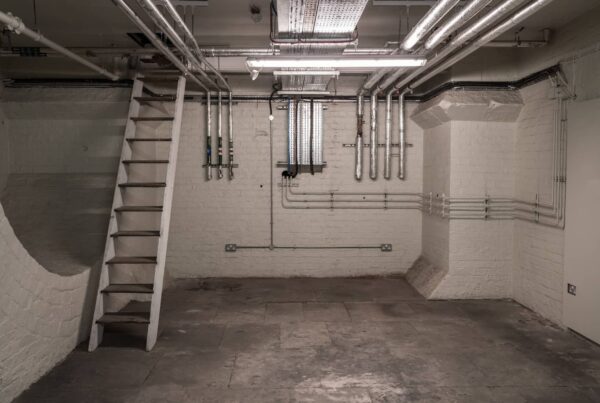
Brick foundation repair restores a deteriorating brick-and-mortar foundation through repointing failed mortar, replacing damaged brick, sealing cracks, and reinforcing walls that have started to move.
The right method depends on whether the damage is cosmetic or structural, and getting that diagnosis right is the difference between a lasting fix and a problem that returns.
Ohio is full of older brick homes, and our freeze-thaw winters are hard on mortar and masonry. The team at Buckeye Basement Solutions repairs and reinforces foundations across Central Ohio.
This guide explains the warning signs, what causes brick damage, how repairs are done, and what they cost.
Signs Your Brick Foundation Needs Repair
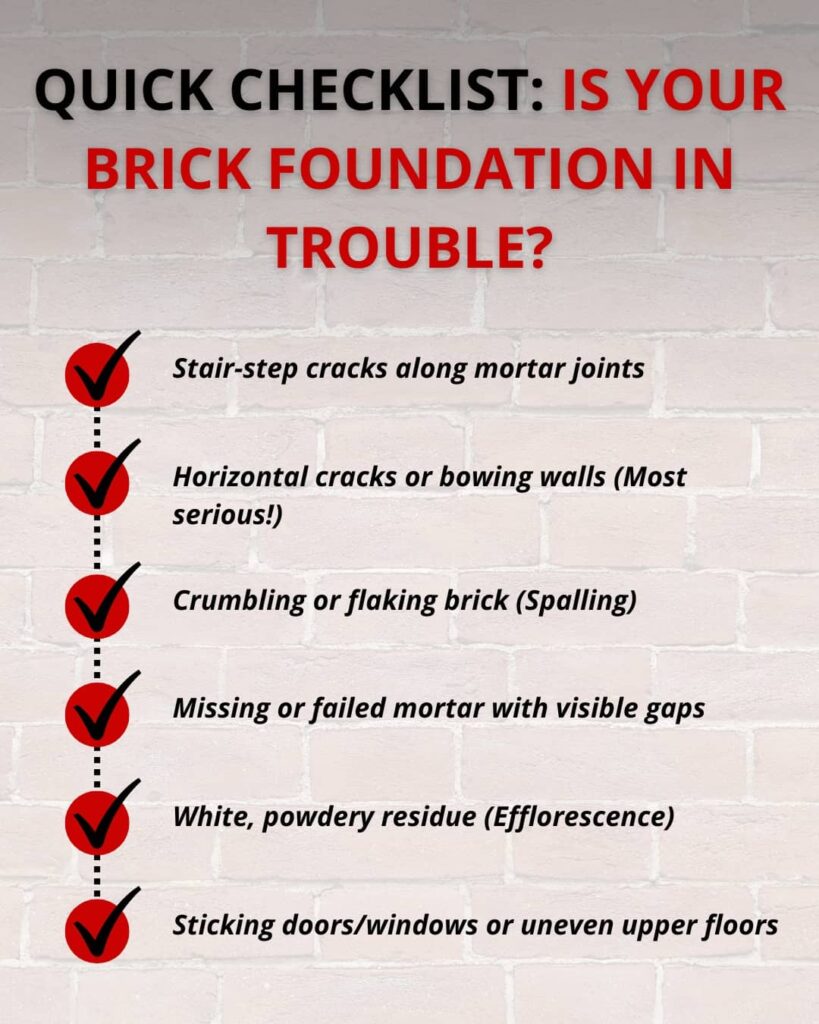
Your brick foundation needs attention when you see cracking, crumbling, or movement in the brick and mortar. Some signs are cosmetic, but several point to structural problems that get worse if ignored. Watch for:
- Stair-step cracks that follow the mortar joints, a classic sign of foundation settlement.
- Horizontal cracks or bowing and bulging walls, which signal soil pressure and are the most serious.
- Crumbling or flaking brick (spalling), where the face of the brick breaks off.
- Failed or missing mortar between bricks, leaving gaps you can fit a key into.
- White, powdery residue (efflorescence), a sign moisture is moving through the masonry.
- Sticking doors and windows or uneven floors upstairs, which can trace back to foundation movement.
Interior clues often appear before you notice the brick itself. Cracks that show up inside the home, like the ones explained in this look at horizontal cracks in drywall, can be the first warning that the foundation below is shifting.
Home inspectors track these same patterns, and a rundown of what your home inspector sees shows how foundation movement gets spotted from the inside out.
The earlier you catch these signs, the cheaper the fix, because a hairline mortar gap is far simpler to repair than a wall that has already started to bow.
What Causes Brick Foundation Damage?
Brick foundation damage usually comes from water, soil movement, and the slow breakdown of old mortar. In Ohio, a few causes do most of the work:
- Freeze-thaw cycles. Water absorbed into brick and mortar freezes, expands, and breaks the masonry apart over many winters. The National Park Service confirms freeze-thaw is a primary cause of masonry deterioration in northern climates.
- Clay soil movement. Ohio’s clay swells when wet and shrinks when dry, and that constant movement causes differential settlement that shows up as stair-step cracks.
- Hydrostatic pressure. Saturated soil pushes against the foundation, bowing brick and block walls inward.
- Failing or wrong mortar. Old lime mortar erodes over time, and patching soft historic brick with hard Portland mortar traps moisture and accelerates spalling.
- Poor drainage. Clogged gutters, short downspouts, and grading toward the house keep the foundation wet.
Because water drives so much of this, controlling moisture around the foundation is part of any real repair, not an afterthought.
How Brick Foundations Are Repaired
Brick foundations are repaired by fixing the mortar, replacing damaged brick, reinforcing any structural movement, and correcting the drainage that caused the damage. A complete repair usually combines several of these.
Repointing the Mortar Joints
Repointing means grinding out failed mortar and packing in fresh mortar to restore the joint. It is the most common brick foundation repair and the key to keeping water out.
On older homes, the new mortar should be softer and more permeable than the brick so it does not trap moisture, a principle the National Park Service explains in its guidance on repointing mortar joints in historic masonry.
Replacing Spalled or Crumbling Brick
When individual bricks have spalled or crumbled, they are cut out and replaced with matching units. This restores both the look and the load-bearing strength of the wall.
The National Park Service also documents the most common problems with brick masonry, including why spalling happens and how to address it.
Structural Reinforcement (Carbon Fiber and Steel)
When a wall is cracking or bowing from soil pressure, cosmetic repair is not enough. Buckeye Basement Solutions reinforces walls with carbon fiber straps for cracking and early bowing, and with steel I-beams for walls that need stronger support.
Carbon fiber is a low-profile option that bonds to the wall and stops it from moving further, while steel beams brace a wall that has already shifted more significantly.
Both stabilize the wall in place without tearing it out, which keeps the repair faster and less disruptive. For the full picture of structural options, see our overview of basement foundation repair methods.
Drainage and Waterproofing
Because water causes most brick damage, lasting repair includes fixing drainage: regrading, extending downspouts, and adding interior drainage or waterproofing where needed.
Skipping this step is why so many repointing jobs fail within a few years.
Repointing vs. Tuckpointing: What’s the Difference?
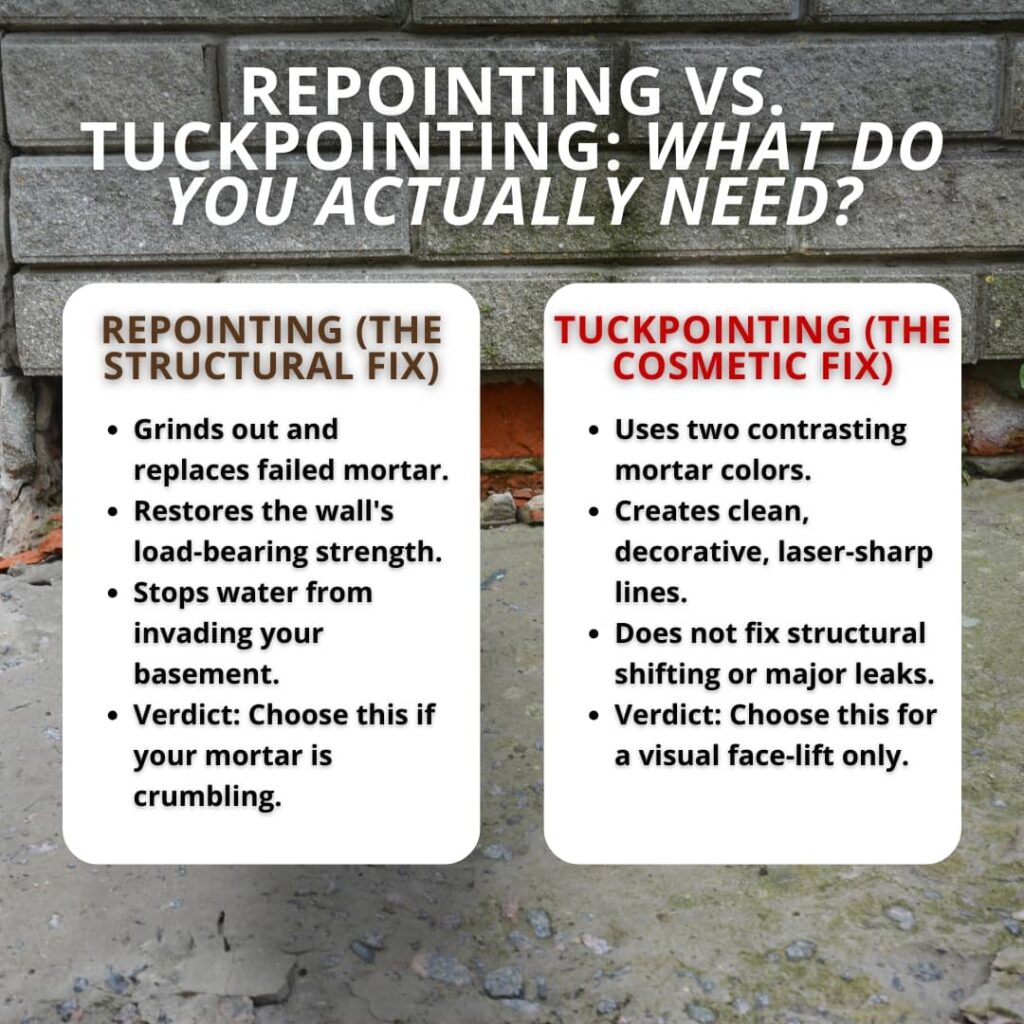
Repointing is a structural repair, while tuckpointing is mostly cosmetic, and the two are often confused. It removes deteriorated mortar and replaces it to restore the joint’s strength and keep water out.
Tuckpointing uses two colors of mortar to create a crisp, decorative line that makes the brickwork look fresh, but it does not address structural problems.
If your foundation is losing mortar or taking on water, you need repointing, not tuckpointing. For why ignoring failing brickwork matters, our team breaks it down in terms of why fixing damaged brickwork is critical to home health.
Brick Foundation Repair Costs
Brick foundation repair costs range from a few hundred dollars for minor repointing to several thousand for structural reinforcement, depending on the damage.
These are typical national ranges, so your real cost depends on your home and the cause:
| Repair | Typical cost range | DIY or pro |
|---|---|---|
| Minor mortar repointing (small area) | $200–$1,000 | DIY-feasible for small spots |
| Full-wall repointing | $1,000–$3,000+ | Pro |
| Brick replacement (spalled units) | $500–$2,000 | Pro |
| Carbon fiber strap reinforcement | $350–$1,000 per strap | Pro |
| Steel beam wall reinforcement | $500–$1,500 per beam | Pro |
| Drainage/waterproofing correction | $1,500–$8,000 | Pro |
Buckeye Basement Solutions offers free written estimates and beats any written competitor’s price, so an inspection is the only way to know your true cost.
Related Questions to Explore
Does a cracked brick mean I have a foundation problem?
Not always. A single hairline crack can be cosmetic from normal thermal movement, but stair-step cracks, horizontal cracks, and bowing walls usually signal foundation settlement or soil pressure. If cracks are widening or appearing in patterns, have them inspected.
What is the difference between repointing and tuckpointing?
Repointing is the structural repair that removes failed mortar and replaces it to restore strength and keep water out. Tuckpointing is largely decorative, using two mortar colors to create a clean line, and does not fix structural issues.
Why are the bricks in my foundation crumbling?
Crumbling, or spalling, usually comes from water getting into the brick and freezing, especially in Ohio winters. It is often made worse when soft historic brick was patched with hard Portland mortar, which traps moisture and breaks the brick face.
Can you repair a brick foundation yourself?
Small, isolated mortar patching is DIY-feasible for a handy homeowner. Extensive repointing, brick replacement, spalling, and any structural cracking or bowing should be done by a professional, because the wrong materials or a missed structural cause can make the damage worse.
What do stair-step cracks in brick mean?
Stair-step cracks that follow the mortar joints in a diagonal pattern are a classic sign of foundation settlement, where part of the foundation has moved. They should be evaluated by a professional, since the fix usually involves stabilizing the foundation, not just sealing the crack.
When to Call a Professional
Call a professional when you see stair-step or horizontal cracks, bowing walls, widespread spalling, or any movement in the foundation. Those are structural signs, and patching the surface without addressing the cause only hides the problem.
A foundation specialist can determine whether you need repointing, brick replacement, structural reinforcement, drainage work, or a combination, and do it in the right order.
Foundation problems are also a common finding when buying or selling a home, as Georgia inspectors describe in how a home inspection works, so getting ahead of repairs protects your home’s value, too.
Buckeye Basement Solutions is a BBB-accredited, owner-operated company with more than 30 years of combined experience serving Columbus and Central Ohio, including Dublin, Hilliard, Westerville, Newark, and Lancaster.
We give honest assessments with no commissioned salespeople and back our work with a transferable warranty. Learn more about our foundation repair services and masonry and wall rebuild work, or check the areas we serve.
Conclusion
A brick foundation can last for generations with the right repairs at the right time. Keep these takeaways in mind:
- Stair-step and horizontal cracks, bowing, and spalling are structural signs that need a professional.
- Repointing restores strength and keeps water out; tuckpointing is cosmetic.
- Lasting repair fixes the cause, usually water and soil movement, not just the surface.
If your Central Ohio home has a brick foundation showing cracks, crumbling, or movement, reach out to Buckeye Basement Solutions for a free inspection and a clear repair plan.