Horizontal cracks in drywall are the most serious crack pattern homeowners can find on interior walls.
Unlike hairline cracks at seams or diagonal cracks above door frames, a horizontal crack running across a mid-wall section often signals that structural forces are pushing against the wall from outside.
At Buckeye Basement Solutions, we hear from central Ohio homeowners every week who spot a crack, patch it, watch it come back, and then start wondering what was really going on.
This post walks you through what causes horizontal drywall cracks, how to tell whether yours is cosmetic or a warning sign, and what to do next.
What Causes Horizontal Cracks in Drywall?
Horizontal cracks in drywall form when walls experience structural stress, from forces pushing in from outside or from the building’s structure shifting in ways that pull the drywall apart. The cause shapes the fix.
Foundation Wall Movement and Hydrostatic Pressure
The most serious cause is a bowing or shifting foundation wall. When hydrostatic pressure builds in the soil around your basement, that water-saturated earth pushes laterally against the foundation.
Concrete block walls, common in central Ohio homes built between 1940 and 1980, are especially prone to horizontal cracking at mid-height, where soil pressure is greatest.
That movement in the foundation wall transmits upward into the structure above, creating horizontal cracks in the drywall on the floors overhead.
Expansive Clay Soils and Freeze-Thaw Cycles
Ohio’s central counties sit on heavy clay-dominant soils. Clay expands when wet and contracts when dry, creating ongoing lateral pressure cycles against basement walls throughout the year.
Winter freeze-thaw cycles compound this: frozen soil can expand against foundation walls with enough force to crack concrete block over time.
This is a primary reason homeowners in the Columbus metro area see more horizontal drywall cracks than homeowners in regions with sandy soils.
If you notice the same crack growing each fall or spring, Ohio’s freeze-thaw cycle is a likely contributor.
Water Damage and Moisture Infiltration
Water infiltrating behind drywall weakens the paper facing and gypsum core, causing horizontal separations, especially near the base of walls or around window frames.
Moisture-driven cracks are typically accompanied by staining, soft or bubbling paint, or a musty odor. Left unaddressed, this type of water intrusion can lead to mold growth inside the wall cavity.
Per EPA guidelines on mold in buildings, any visible mold growth or sustained moisture intrusion should be addressed at the source, not just at the surface.
Normal Settling vs. Structural Stress
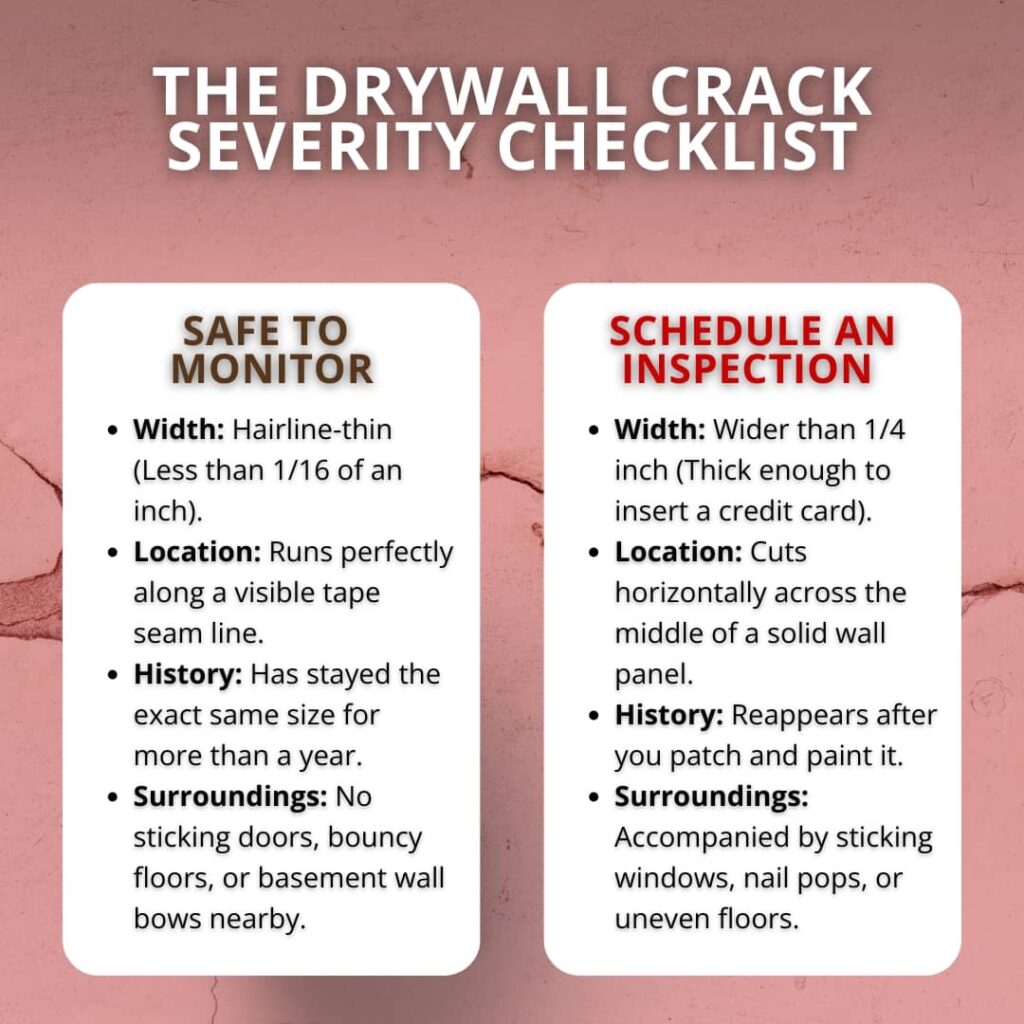
Not every horizontal crack is serious. Seasonal temperature swings cause wood framing to expand and contract. Tape joint cracks, often hairline-width and running precisely along visible seam lines, are typically cosmetic.
The distinction: structural cracks tend to be wider than 1/4 inch, run off seam lines, and grow measurably over months.
Horizontal vs. Vertical vs. Diagonal: Which Crack Is Most Serious?
The orientation of a wall crack is one of the fastest diagnostic clues available. Here is how the common crack types compare:
| Crack type | Common cause | Severity level |
|---|---|---|
| Horizontal (mid-wall) | Foundation pressure, bowing wall | High |
| Diagonal (45° from corners) | Differential settlement | Moderate to high |
| Stair-step (masonry joints) | Block wall movement or soil pressure | Moderate to high |
| Vertical (on seam) | Thermal movement, tape joint failure | Usually low |
| Hairline (along seam line) | Normal seasonal movement | Low (cosmetic) |
Horizontal cracks stand out because they run against the grain of normal wood movement. When a crack is horizontal, crosses the middle of a wall panel (not along a seam), and is wider than 1/4 inch, it needs attention.
Nail popping, sticking doors, and out-of-level floors alongside that crack shift the situation from “monitor” to “call a professional.”
How to Assess the Severity of a Horizontal Drywall Crack
Before calling anyone, a few quick checks can clarify what you are dealing with.
Check the Width
Hairline cracks less than 1/16 inch wide along seams are typically cosmetic. Cracks wider than 1/4 inch anywhere on the wall are a warning sign.
Any crack wide enough to insert a credit card into deserves a professional evaluation.
Check Whether It Returns After Patching
If you have patched a horizontal crack and seen it reappear within a season, the underlying cause is still active.
A returning crack is the single strongest indicator that something structural is happening. The drywall is a symptom, not the problem.
Check for Companion Symptoms
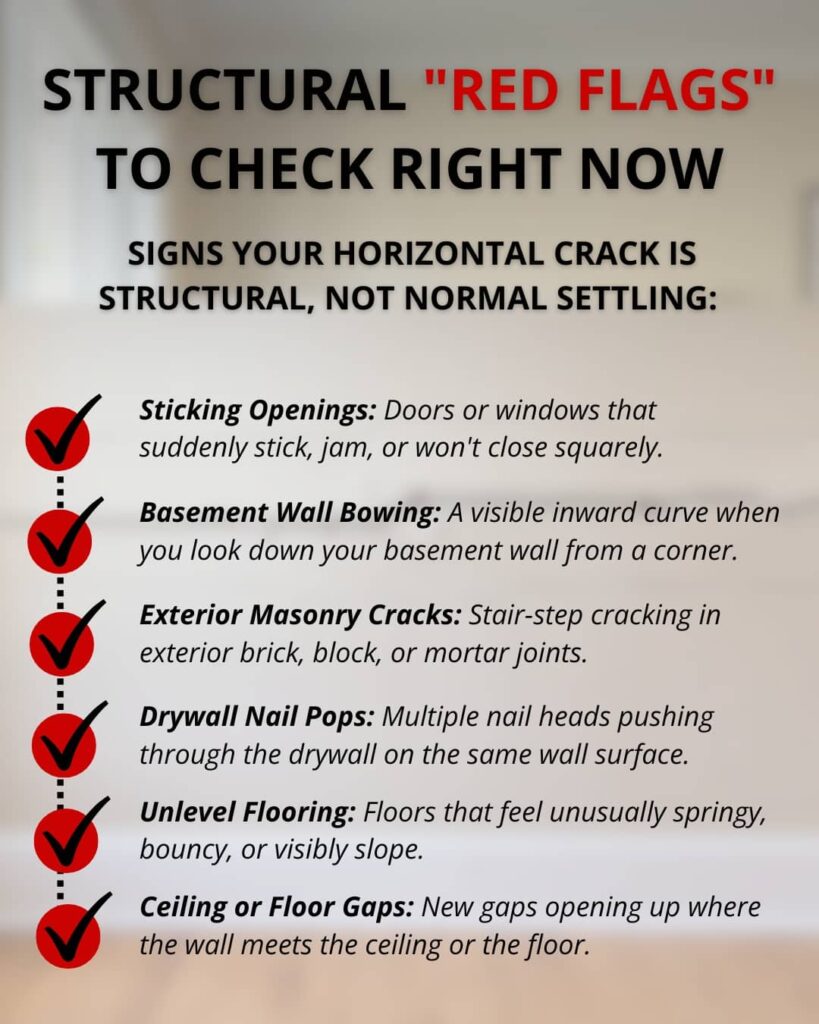
- Horizontal drywall cracks that appear with any of the following warrant a call to a foundation specialist:
- Doors or windows that suddenly stick or no longer close squarely
- A visible bow in a basement wall when you look down from a corner
- Stair-step cracks in brick, block, or mortar joints on the exterior
- Nail pops are spreading across the same wall surface
- Floors that feel springy or uneven
- Gaps are opening between the wall and ceiling or floor
The closer the crack is to the foundation, and the more of these symptoms are present, the more likely you are to be looking at a structural issue rather than a seasonal one.
Signs the Crack Points to Foundation Damage
Certain combinations of symptoms trace back to the foundation with enough regularity that they are worth knowing before you reach for spackle.
Bowing Basement Walls
A foundation wall that has moved inward even slightly, visible as a gentle curve when you sight down the wall from one corner, means lateral pressure exceeds what the wall was designed to handle.
The horizontal crack in your drywall upstairs may reflect that bowing movement directly.
Bowing walls can be stabilized with carbon fiber straps, wall anchors, or steel beam systems, depending on the degree of movement. Waiting makes all of these options more expensive.
Stair-Step Cracking in Masonry
Exterior brick or block walls showing stair-step cracks in the mortar joints, combined with interior horizontal drywall cracks on the same wall plane, are a reliable sign of differential settlement or lateral soil movement.
When the exterior and interior patterns align, the cause is structural, not cosmetic.
Seasonal Crack Growth
Foundation-driven cracks tend to grow in a pattern tied to soil conditions: wider and more active in wet springs (April through June in Ohio) and after hard freeze-thaw cycles in winter.
If you photograph a crack and compare it six months later, growth of more than 1/8 inch is significant. Per InterNACHI’s Standards of Practice, home inspectors are trained to flag horizontal and diagonal drywall cracks as potential indicators of structural movement requiring further evaluation by a specialist.
If you have been tracking a horizontal crack that has grown between seasons, do not wait another cycle. Learn more about how a flooded basement turns into a foundation problem to understand how water pressure translates into wall damage over time.
Related Questions to Explore
How can you tell if a wall crack is structural or cosmetic?
Cosmetic cracks are typically hairline-width and run precisely along drywall tape seams due to minor, everyday settling. Structural cracks are usually wider than a quarter-inch, run diagonally or horizontally across solid wall panels, and reappear after being patched. When cracks occur alongside sticking doors or bowing basement walls, they require a professional structural assessment.
Can hydrostatic pressure and water damage cause interior walls to crack?
Yes. When saturated soil pools against a home’s exterior, it creates immense hydrostatic pressure. This force pushes inward against the basement foundation walls, causing them to bow and crack. Over time, this structural shifting telegraphs upward, fracturing the framing and drywall on upper floors. Proper basement waterproofing and drainage management are essential to relieve this pressure.
What causes stair-step cracks in exterior brickwork?
Stair-step cracking along mortar joints is a primary indicator of foundation settlement or lateral soil movement. When the ground beneath a home shifts unevenly, the rigid exterior masonry breaks along its weakest points. This exterior damage often directly mirrors the shifting that causes interior drywall failure.
How do crawl space moisture and support issues affect the upper floors?
Excess moisture in an unencapsulated crawl space rots wood support joists and weakens subfloors, leading to bouncy or unlevel flooring upstairs. As the structural carpentry beneath the home sags and shifts, it pulls on the wall framing above, which frequently forces cracks to open up in the finished drywall.
When to Call a Foundation Professional
Some horizontal cracks in drywall are worth monitoring and patching yourself. Others need a professional assessment within days.
Act quickly if any of these are true:
- The crack is wider than 1/4 inch
- The crack has returned after being patched once or more
- You can see or feel a bow in a basement wall
- Doors or windows have started sticking or no longer close squarely
- Multiple horizontal cracks appear in the same area of the house
- The crack is in a wall directly above a basement or crawl space
- Companion symptoms like nail popping, floor bounce, or visible gaps at ceiling or floor have appeared
Safe to monitor if all of these are true:
- The crack is hairline-width and runs precisely along a visible tape seam
- It has been stable (no growth) for more than a year
- No companion symptoms are present
When foundation movement is the cause, early intervention almost always costs less than waiting. Stabilizing a bowing wall before it shifts significantly is a smaller repair than one that has already moved. If you are not sure what you are looking at, a professional inspection can answer the question quickly.
Buckeye Basement Solutions specializes in foundation repair for bowing walls, settlement issues, and the water intrusion that drives horizontal cracking in central Ohio homes. If you are seeing warning signs, the inspection is free, and there is no obligation to proceed.
Conclusion
Horizontal cracks in drywall range from cosmetic to serious, and the distinction comes down to width, location, whether they return after patching, and what else is happening in the house.
A hairline crack along a seam that has been stable for a year is likely cosmetic.
A horizontal crack wider than 1/4 inch, off a seam, that has come back after patching is worth a professional look.
Key takeaways:
- Horizontal cracks are the most structurally significant crack orientation in drywall
- Recurring cracks after patching, companion symptoms like sticking doors, and seasonal crack growth all point to foundation causes
- Ohio’s freeze-thaw cycles and clay soils make central Ohio homeowners particularly vulnerable to foundation-driven drywall cracking
If you are seeing horizontal cracks in your drywall or basement walls in central Ohio, contact Buckeye Basement Solutions to schedule a foundation inspection. We will tell you exactly what you are dealing with and what your options are.