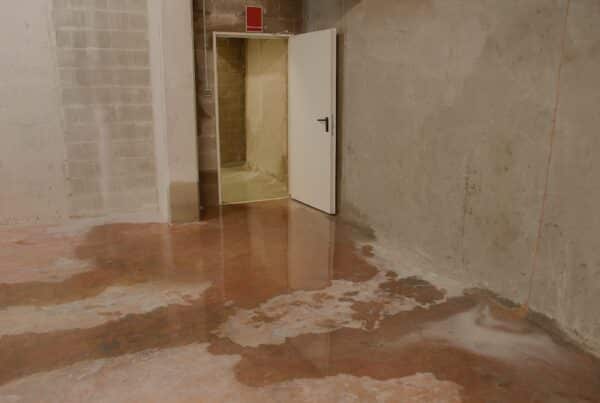
Water gets into your basement after heavy rain for one main reason: saturated soil pushes moisture through any crack, gap, or weak spot in your foundation.
This force is called hydrostatic pressure, and it builds fast during a heavy storm.
The good news is that most causes are fixable, once you know where the water is getting in. At Buckeye Basement Solutions, we’ve helped hundreds of Columbus-area homeowners track down their leaks and stop them for good.
Below, you’ll find the seven most common entry points, a guide to finding your leak source, and a clear breakdown of which fixes actually work.
What Causes Water to Enter Your Basement When It Rains?
Water seeps into basements during rainstorms because of hydrostatic pressure. When rain falls faster than the soil can drain, water builds up around your foundation walls.
That water pushes inward, searching for any crack or gap to move through.
In Columbus and Central Ohio, this problem hits harder than in many other parts of the country.
Here’s why:
Clay-Heavy Soil
Most of Central Ohio sits on dense clay-based soil. Clay absorbs water slowly and holds onto it for a long time. After a heavy storm, clay soil can stay saturated for days, keeping constant pressure on your foundation.
The Clay Bowl Effect
When a home is built, contractors backfill the excavated soil around the foundation. That backfill is looser than the surrounding native clay.
Water flows into that loose zone first, and then stays there, pressing against your foundation walls from every side.
Ohio’s Spring Storms
Columbus averages about 40 inches of rainfall per year. Spring brings the heaviest storms, often layered on top of snowmelt.
That combination saturates the soil faster than at almost any other time of year.
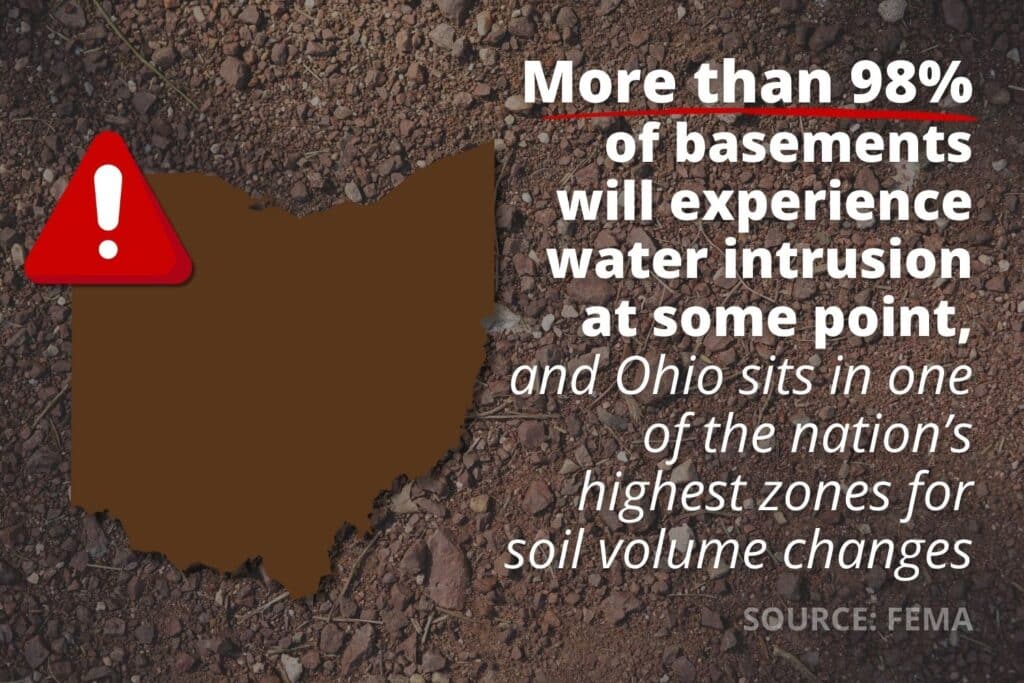
According to FEMA flood documentation, 98 percent of basements will experience some form of water intrusion in their lifetime. In Ohio’s clay-dense conditions, the odds are even higher.
7 Common Entry Points for Rain-Driven Basement Leaks
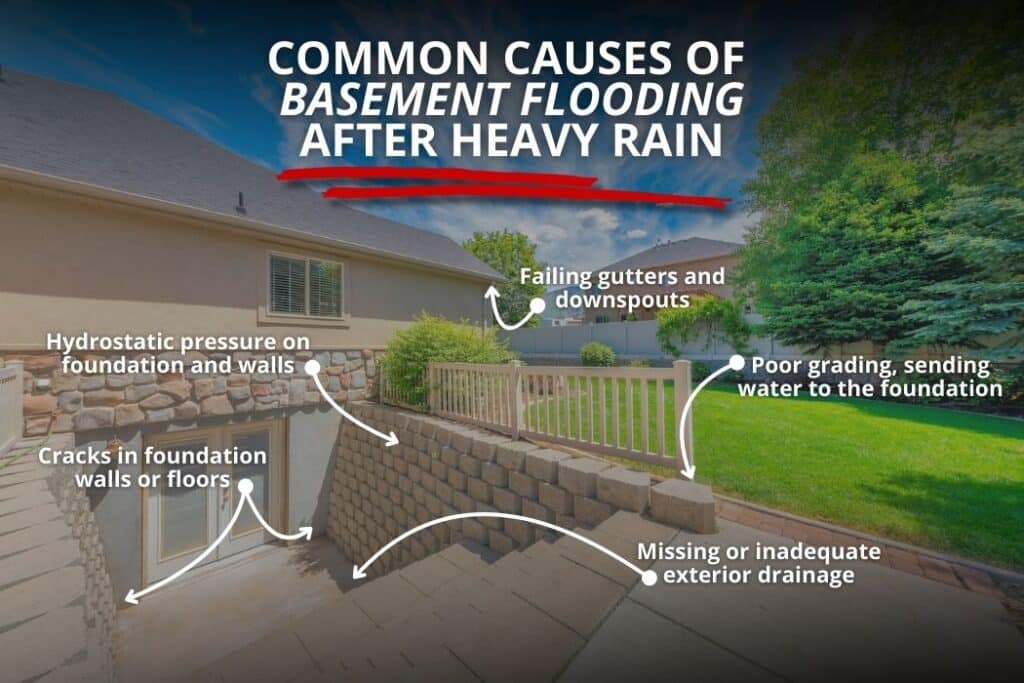
Knowing where water gets in is the first step toward fixing it. Here are the seven most common entry points:
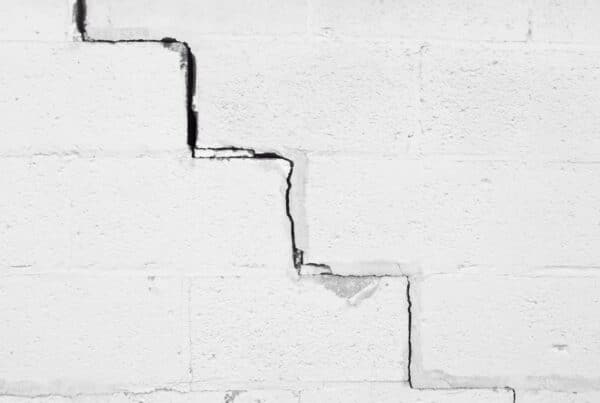
1. Cracks in foundation walls. Concrete walls crack over time from settling, temperature changes, and pressure. Vertical cracks are common as concrete cures and are usually less serious. Horizontal cracks signal serious lateral pressure and need professional attention right away. Diagonal cracks often point to differential settling.
2. The cove joint. The cove joint is where your basement floor meets the foundation wall. It is not a sealed seam; it is a gap. When water pressure builds under the floor slab, it pushes up through that gap. If you see water appearing along the base of your walls, the cove joint is often the culprit.
3. Window wells. Basement windows sit at or below grade level. Window wells without proper drainage fill up fast during a storm. Once full, water presses against the window frame and finds its way inside.
4. Gutters and downspouts. Clogged or misdirected gutters dump water right next to your foundation instead of channeling it away. Even a small gap in downspout extensions can direct hundreds of gallons of water toward your house during a storm.
5. Poor yard grading. Your yard should slope away from the house so water drains away from the foundation. Over time, soil settles, and grading flattens out (or even slopes toward the house), sending rain directly to your foundation walls.
6. Sump pump failure or absence. If your home has an interior drainage system but the sump pump fails, or if you do not have one at all, water that collects in the system has nowhere to go.
7. Window and door frame seals. Aging caulk around basement windows and exterior door frames can crack or shrink over time, letting water seep through during heavy rains.
How to Tell Where Your Basement Leak Is Coming From
Before you fix anything, you need to know what you are dealing with. Not all wet walls are leaks; some are condensation. Here is how to tell the difference:
1) The plastic tape test. Cut a piece of plastic sheeting about 12 inches square. Tape it tightly to a damp section of your wall and leave it for 24 hours.
If the wall side is wet when you peel it off, water is seeping in from outside. If the room side is wet, you are dealing with condensation, not a leak.
2) Wall seepage vs. floor seepage. Water appearing on your walls typically points to a crack, a failing exterior coating, or a drainage issue outside.
Water appearing along the base of the wall or up through the floor usually points to hydrostatic pressure from below, the cove joint, or a high water table.
3) Is it one side or all around? Leaks that appear on just one wall often trace back to a specific drainage problem nearby, a clogged gutter, a downspout that dumps near that corner, or a grading issue on that side of the house.
Water appearing all around suggests hydrostatic pressure from saturated soil on all sides.
For a deeper look at early warning signs, our post on signs and risks of water seepage in a basement covers the visual clues that are easy to miss.
DIY Fixes That Can Actually Help (and What to Skip)
Some rain-driven basement leaks respond well to simple maintenance. Others need professional systems. Here is a clear breakdown:
These DIY fixes are worth doing:
- Clean your gutters and extend downspouts. Make sure gutters are free of debris, and downspouts discharge at least six feet from the foundation. This is the single most cost-effective step most homeowners can take.
- Regrade the soil around your house. The ground should slope away from your foundation at about one inch per foot for the first six feet. Adding soil along the perimeter and tamping it down is a manageable project.
- Install window well covers. Polycarbonate covers keep rain out of window wells and are inexpensive to add.
- These DIY fixes are not permanent solutions:
- Waterproofing paint or sealants. These products can slow minor moisture vapor, but they cannot stop hydrostatic pressure. Water will push right through them over time.
- Hydraulic cement. Plugging cracks with hydraulic cement is a short-term patch. Water finds another path once the pressure builds again. It buys time, not a fix.
Permanent Solutions for a Dry Basement
When DIY maintenance is not enough, these are the systems that actually stop recurring basement leaks:
- Interior drainage system. A perimeter drain channel is installed along the inside base of your foundation walls. It collects water before it can flood the floor and routes it to a sump basin. This is the most common solution for cove joint seepage and wall weepage.
- Sump pump installation or upgrade. A properly sized sump pump with a battery backup removes collected water even during power outages, which often happen during the same storms that cause leaks.
- Crack repair. Minor wall cracks can be sealed with epoxy injection, which bonds to concrete and restores structural integrity. Horizontal cracks or bowing walls require carbon fiber straps or wall anchors to relieve lateral pressure.
- Exterior waterproofing. In severe cases, excavating around the exterior, applying a waterproof membrane, and installing a French drain around the footer provides the most complete protection.
- Crawl space encapsulation. If your home has a crawl space, sealing it with a vapor barrier prevents ground moisture from entering the living areas above. Our post on basement and crawl space waterproofing explains how this protects your full foundation system.
Our basement waterproofing services page covers all of the systems we install, with information about what each one addresses.
Related Questions
How can I tell if my sump pump is ready for heavy seasonal rainfall? Testing your system before a storm hits is the best way to prevent failure. Pour enough water into the sump pit to raise the float switch; the pump should activate immediately and discharge the water efficiently.
If the pump hums but doesn’t pump, runs constantly, or fails to turn on, you likely need professional sump pump & pit services or a battery backup upgrade to ensure continuous operation during a power outage.
What is the difference between a cosmetic concrete crack and structural foundation damage? Hairline vertical cracks are common as concrete cures and settles over time. However, horizontal cracks, diagonal stair-step cracks in brickwork, or walls that visibly bow inward indicate serious lateral pressure from the surrounding soil.
These symptoms require specialized foundation repair services or masonry repair to stabilize the structure before water pressure causes further compromise.
Can moisture from a crawl space cause the same issues as a wet basement? Yes. High humidity and standing water in a crawl space will travel upward into your living areas due to the “stack effect.” This leads to sagging floors, mold growth, and poor indoor air quality throughout the home.
Combining crawl space encapsulation with high-capacity clean air dehumidifier systems seals out ground moisture and maintains healthy, dry conditions beneath your living spaces.
Does long-term basement moisture affect the wooden framing of a house? Persistent water leaks and high humidity will eventually rot the wooden floor joists, sill plates, and support posts that sit directly on top of your foundation.
When structural wood absorbs moisture, it weakens, warps, and attracts pests. Once the moisture source is stopped, targeted structural carpentry is often required to reinforce or replace the damaged framing and restore the home’s weight-bearing integrity.
When to Call a Professional
DIY maintenance helps, but some situations call for a professional evaluation right away:
- Water is appearing along the full perimeter of your basement floor
- You see horizontal cracks in block or poured concrete walls
- Your walls are visibly bowing or leaning inward
- You have had standing water in your basement more than once
- Mold is growing on your basement walls or floor joists; per EPA guidance on mold and moisture, mold can begin growing within 24 to 48 hours of water exposure
- You have already tried DIY fixes, and the leaks returned with the next heavy storm
Buckeye Basement Solutions offers free inspections for Columbus-area homeowners.
Our team identifies the source of your leak and recommends the right solution: whether that is a simple gutter correction or a full interior drainage system.
Conclusion
Water leaking into your basement after heavy rain is a solvable problem.
In most cases, it comes down to one or more of the seven entry points covered above: foundation cracks, the cove joint, window wells, gutters, grading, sump pump issues, or failing seals.
Knowing where the water gets in is the first step.
Simple maintenance, cleaning gutters, extending downspouts, and regrading soil, can stop minor leaks. For persistent or worsening water problems, a permanent waterproofing system is the right answer.
Ready to stop the guessing and get a real answer? Contact Buckeye Basement Solutions to schedule a free inspection, and let us find exactly where your basement is letting water in.