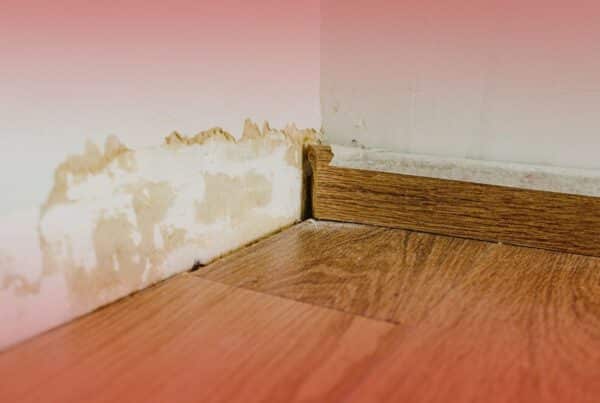
A musty smell coming from your basement is easy to brush off at first. You notice it when you open the door, maybe when company comes over, and then you close it and move on. But that smell is not just unpleasant. It is a signal that something below your home needs attention.
The good news is that diagnosing the source in a wet basement is usually straightforward once you know what to look for. Getting rid of it for good depends entirely on what is causing it, and that varies from one home to the next.
What Causes a Musty Smell in the Basement?
The musty odor most people notice is almost always connected to moisture.
Mold, mildew, and bacteria that thrive in damp environments release gases called microbial volatile organic compounds (MVOCs), and that earthy, stale smell is MVOCs.
In Central Ohio, basements are especially prone to this. Concrete and block foundations are porous. Warm, humid air seeps in through walls and floors.
Groundwater from Ohio’s spring thaws and heavy rain pushes through foundation seams and cracks. The result is a space that stays damp without much natural airflow to dry it out.
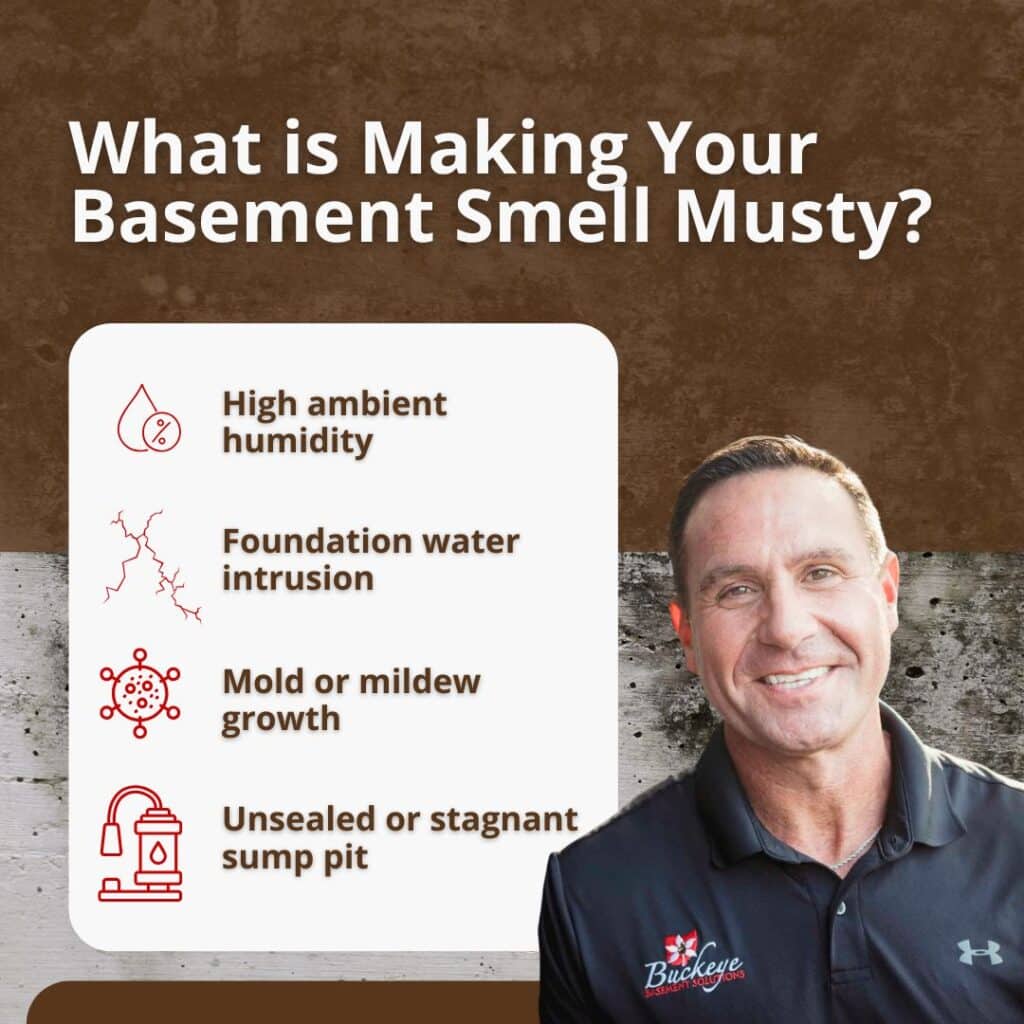
The most common sources of musty basement odors include…
- Mold or mildew on walls, wood framing, drywall, or stored items
- High ambient humidity, even without visible water
- Water intrusion through foundation cracks, floor seams, or window wells
- A damp or unencapsulated crawl space connected to the basement
- Organic materials like cardboard, old carpet, or fabric that have absorbed moisture
- A sump pit that is uncovered or not cycling properly
The smell alone does not tell you which one is the culprit. That is where diagnosis comes in.
How to Diagnose the Source
Work through these steps before reaching for air fresheners or assuming you need a major fix.
Step 1: Follow the smell. Walk through the basement slowly and notice where the odor is strongest. Near a specific wall? The sump pit? The floor? Smells travel, but they concentrate near the source.
Step 2: Look for visible mold or moisture. Check wall corners at floor level, the band joist area where the floor meets the foundation, stored items, around windows, and any exposed wood framing. Mold can appear black, gray, green, or white. Mildew is often powdery and gray or white.
Step 3: Check for efflorescence. White, chalky deposits on your foundation walls or floor are called efflorescence. They form when water moves through concrete and leaves mineral salts on the surface. They are not mold, but they are a reliable sign that water is actively traveling through your foundation.
Step 4: Measure your humidity. An inexpensive hygrometer gives you a real number. Relative humidity above 60% is enough for mold and mildew to grow, even without any visible water source. Columbus basements can regularly hit 70% or higher during spring and summer.
Step 5: Inspect what you are storing. Cardboard, old carpet, and fabric furniture absorb moisture and can develop mold in places you cannot easily see. If your storage has been sitting in a chronically damp space, it may be a major contributor to the smell.
Step 6: Check the sump pit. Remove the lid and smell it directly. An open or unsealed sump pit allows odors and moisture to rise straight into the basement. Stagnant water that is not moving regularly will also contribute.
How to Get Rid of the Smell for Good
The fix depends on the cause. There is no universal solution, but the approaches below address the most common sources in Columbus basements.
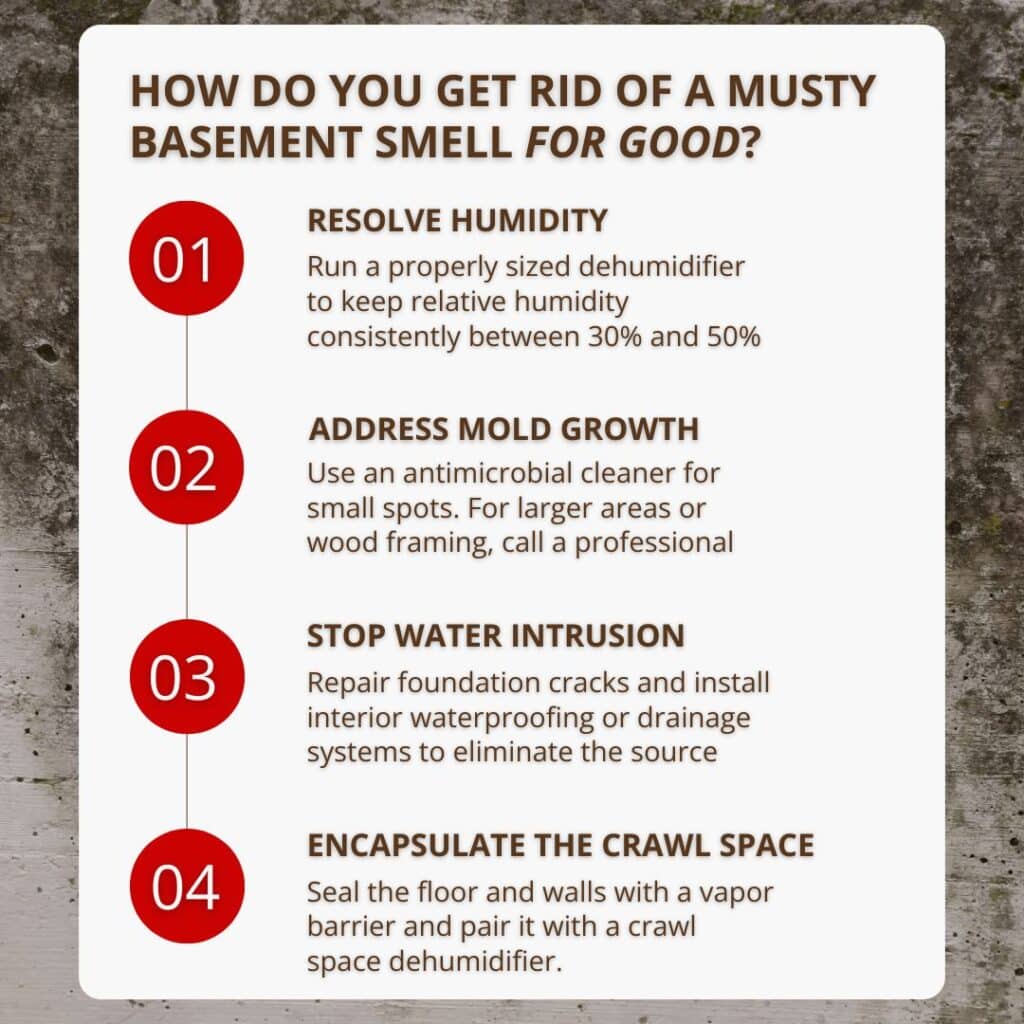
Resolve High Humidity
A properly sized dehumidifier is the most direct tool for managing ambient moisture. The goal is to keep the relative humidity consistently between 30% and 50%.
| Feature | What to Look For |
| Capacity | 50 to 70 pints per day for a typical basement |
| Temperature rating | Rated for cooler temps, ideally down to 41°F |
| Drainage | Built-in pump or drain line, so you do not have to empty it manually |
A box-store unit can help temporarily, but it is not built for the demands of a below-grade space with ongoing humidity.
A professionally installed clean air dehumidifier system is designed for this environment, runs continuously without manual upkeep, and filters air before it moves through your home’s HVAC system.
Address Mold or Mildew Growth
Bleach kills surface mold on non-porous materials, but it does not penetrate concrete, wood, or drywall. The root structure survives, and the mold returns.
For small spots on concrete under about 10 square feet, an appropriate antimicrobial cleaner followed by moisture correction is reasonable. For anything larger, or for mold on wood framing or drywall, professional remediation is the right call.
After remediation, the moisture source still needs to be fixed. Without that step, mold always comes back.
Stop Water Intrusion
If the smell gets worse after rain, or if you see wet spots, water stains, or efflorescence on your walls, water is entering the space. This is one of the most persistent causes of musty odors because the moisture source never goes away on its own.
Resolving it typically involves some combination of:
- Interior waterproofing systems that channel water to a drain and sump before it can damage the space
- Foundation crack repair using epoxy or polyurethane injection
- Exterior grading adjustments to direct water away from the foundation
- Sump pump installation or replacement
Fixing a Damp Crawl Space
If your home has a crawl space, the smell may be originating there. An unencapsulated crawl space pulls in outdoor air and stays humid year-round. Mold grows on wood joists and subflooring, and the odor travels up through the floors above.
Crawl space encapsulation seals the floor and walls with a heavy vapor barrier, cutting off the primary moisture source. Paired with a crawl space dehumidifier, it keeps conditions stable regardless of what Ohio’s weather throws at it.
Check Stored Items
Remove anything that has become a moisture sponge. Old carpet, cardboard boxes, and upholstered furniture that have been stored in a chronically damp space often cannot be saved and should come out.
Replace cardboard with sealed plastic bins and monitor humidity for a few weeks after.
Temporary Fixes vs. Permanent Solutions
Air fresheners, baking soda, and charcoal bags will mask the smell temporarily, but do nothing for the source.
Ventilation fans can help reduce humidity in some situations, but are not effective in Columbus basements, where the air being drawn in is itself warm and humid.
The only way to permanently eliminate a musty basement smell is to eliminate the moisture source that is feeding it.
| Temporary Fix | What It Does | What It Does Not Do |
| Air freshener / deodorizer | Masks odor | Addresses moisture or mold |
| Charcoal bags | Absorbs some odor | Controls humidity or water |
| Box fan ventilation | Increases airflow | Reduces the outdoor humidity being introduced |
| Surface bleach cleaning | Kills surface mold | Penetrates porous surfaces or fixes the cause |
| Dehumidifier (portable) | Lowers ambient humidity | Fixes water intrusion or existing mold |
A real, lasting fix matches the solution to the actual problem.
Other Recommended Questions
Can a musty basement smell affect the rest of the house?
Yes. Air moves upward from the basement through natural convection and your HVAC system, meaning mold spores and excess humidity from below can circulate into rooms above. Homeowners who notice allergy symptoms that worsen at home often have a basement or crawl space driving it.
Will painting my basement walls help?
Waterproof masonry sealant can slow moisture vapor transmission and make surfaces easier to clean, but it is not a substitute for waterproofing. If water is actively entering through the foundation, paint will bubble and peel within a season.
Does a finished basement make the problem worse?
It can hide it. Drywall, carpet, and drop ceilings trap moisture and give mold surfaces to grow on out of sight. Many Columbus homeowners find significant mold behind finished walls during renovations. A persistent smell in a finished basement is worth investigating before assuming it is minor.
When to Call a Professional
Reach out to a basement specialist when:
- The musty smell persists after removing stored items and improving airflow
- You see visible mold on walls, framing, or materials
- Wet spots or water stains appear after rain
- Your dehumidifier runs constantly, but the humidity stays high
- You suspect the crawl space is involved, but have not been able to check it
At Buckeye Basement Solutions, we offer free inspections to identify exactly what is driving moisture in your basement and what combination of solutions will actually fix it, whether that is waterproofing, encapsulation, a clean air dehumidifier system, or foundation repair.
Conclusion
A musty basement smell is not something to cover up. It is something to trace back to its source and fix. In Columbus homes, that usually means addressing humidity, water intrusion, or both, in the right order so the solution holds.
If your basement has a smell you cannot shake, contact Buckeye Basement Solutions to schedule your inspection and get a straight answer about what your home actually needs.