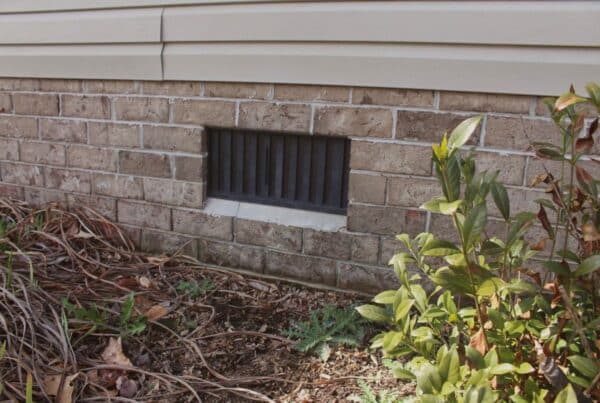
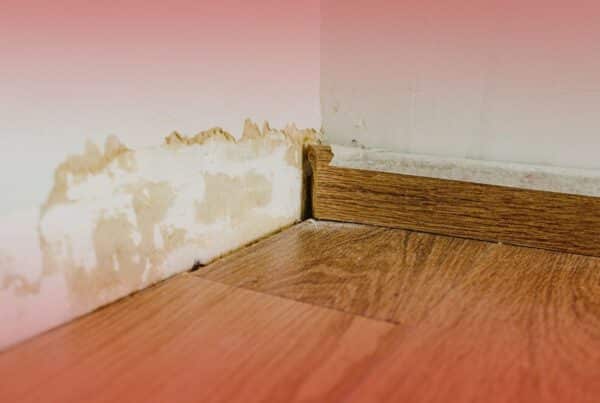
This guide explains what water in a crawl space means, why it happens so often in Central Ohio homes, and how professional solutions can protect the home long term.
Water in a crawl space is one of the most common problems homeowners in Central Ohio face, and one of the easiest to underestimate. Because crawl spaces are hidden beneath the home, water issues can exist for months or even years before they are noticed.
In the Columbus area, crawl space water is often caused by heavy seasonal rain, clay-based soil that holds moisture, and aging homes that were not built with modern moisture protection in mind.
What may start as damp soil or minor pooling can eventually affect floors, structural supports, insulation, and even the air inside the home. Knowing what to do when water shows up is important.
What Does Water in a Crawl Space Mean?
Water in a crawl space means moisture is entering the home faster than it can be controlled or redirected.
A healthy crawl space should be dry or properly sealed. When water is present, it usually points to a failure in one or more systems that protect the foundation. This could include drainage, grading, vapor barriers, or groundwater management.
Even small amounts of water matter. According to the EPA, ongoing moisture is a leading contributor to structural damage and indoor air quality problems in homes.
Because crawl spaces influence the air that moves upward into living areas, moisture below often affects conditions throughout the house.
Why Crawl Spaces Are Especially Vulnerable in Ohio
Homes in the Columbus area face several factors that make crawl spaces more prone to water problems.
Local soils tend to hold water rather than drain it quickly. During heavy rain or spring snowmelt, groundwater levels can rise and push moisture toward the foundation. Summer humidity adds another challenge by increasing condensation on cooler crawl space surfaces.
Many older homes were built with vented crawl spaces and minimal moisture protection. While venting was once considered helpful, modern building science shows that vents often allow humid outdoor air into the crawl space, making moisture problems worse instead of better.
Because crawl spaces are rarely checked, water issues often go unnoticed until they begin affecting floors, odors, or structural components.
Common Causes of Water in a Crawl Space
Crawl space water is usually caused by more than one issue working together.
Common contributors:
- Poor exterior grading that directs water toward the foundation
- Gutters that are clogged, damaged, or missing
- Downspouts that release water too close to the home
- Foundation cracks or gaps that allow seepage
- Missing or damaged vapor barriers
- High groundwater levels after storms
Fixing only one of these issues often does not fully solve the problem. Effective moisture control usually requires addressing how water moves around and under the home.
What Should You Do First When You Find Water?
The first step is to observe and document the situation.
Note where water is present and whether it appears to be standing, pooling in certain areas, or simply dampening the soil. Avoid walking through standing water, especially if electrical wiring or equipment is present.
Next, check outside conditions. Many crawl space water problems start above ground. Look at gutter placement, downspout extensions, and the slope of the soil around the foundation.
If water only appears after heavy rain and dries out within a short time, surface drainage may be the main issue. If moisture is persistent or returns quickly, a professional evaluation is needed.
Why Ignoring Crawl Space Water Is Risky
Water in a crawl space almost never stays contained to that space.
Over time, ongoing moisture can lead to:
- Wood rot in floor joists and support beams
- Corrosion of metal fasteners and hangers
- Uneven or sagging floors above
- Increased humidity inside the home
- Musty odors entering living spaces
Moisture-related issues are among the most common defects found during home inspections. Left unaddressed, crawl space water often becomes more expensive to fix later.
How Crawl Space Moisture Affects Structural Stability
Structural materials are especially sensitive to moisture.
Wood absorbs moisture easily. When moisture levels remain high, wood can weaken and lose its ability to properly support weight. Over time, this can lead to soft floors, shifting supports, and structural repairs.
Metal components may rust, and masonry materials can deteriorate when exposed to repeated wetting. Addressing water early helps protect the home’s structure and avoid more invasive repairs.
Why Temporary Fixes Rarely Solve the Problem
Many homeowners try quick fixes when water appears.
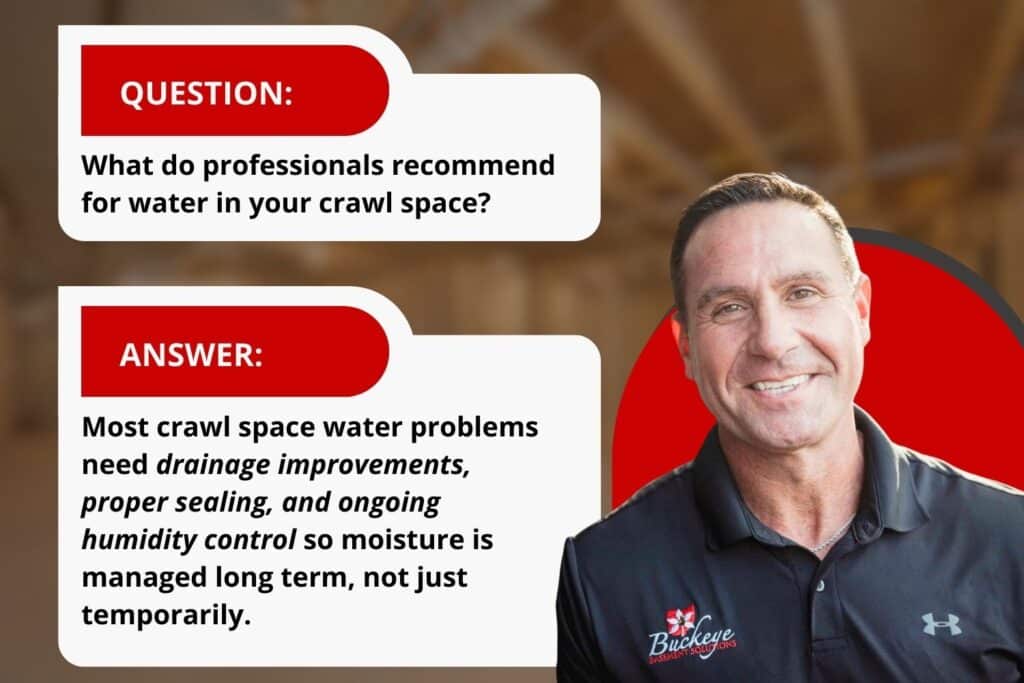
Running fans, adding gravel, or placing a portable dehumidifier may reduce moisture temporarily, but these steps do not stop water from entering the crawl space. Without addressing drainage, sealing, and groundwater control, water will continue to return.
Long-term solutions focus on preventing moisture from entering and managing humidity once the space is protected.
Proven Solutions for Crawl Space Water Control
Effective crawl space solutions are based on the conditions found during inspection. Buckeye Basement Solutions offers several proven approaches, often used together for best results.
Interior Drainage Systems
Interior drainage systems collect water that enters the crawl space and direct it safely away from the foundation. These systems are installed along the interior perimeter and prevent water from pooling beneath the home.
They are especially effective for homes that experience water after heavy rain or seasonal groundwater rise.
Crawl Space Encapsulation
Encapsulation involves sealing the crawl space with a durable vapor barrier along the floor and walls. This prevents ground moisture from entering the space and helps stabilize humidity levels.
Encapsulated crawl spaces stay cleaner, drier, and easier to maintain. They also improve energy efficiency by reducing moisture-related heat loss.
Clean Air Dehumidifier Systems
A dehumidifier alone is not a solution for water entry, but it plays an important role in maintaining a dry environment once drainage and sealing are in place.
Clean Air Dehumidifier Systems help control humidity inside a crawl space after water entry has been addressed. Even when standing water is removed and the crawl space is sealed, moisture can remain in the air.
In Ohio, seasonal humidity and temperature changes can cause condensation on wood framing, insulation, and mechanical components. A whole-home system like this removes excess moisture from the air and helps keep humidity at stable levels year-round.
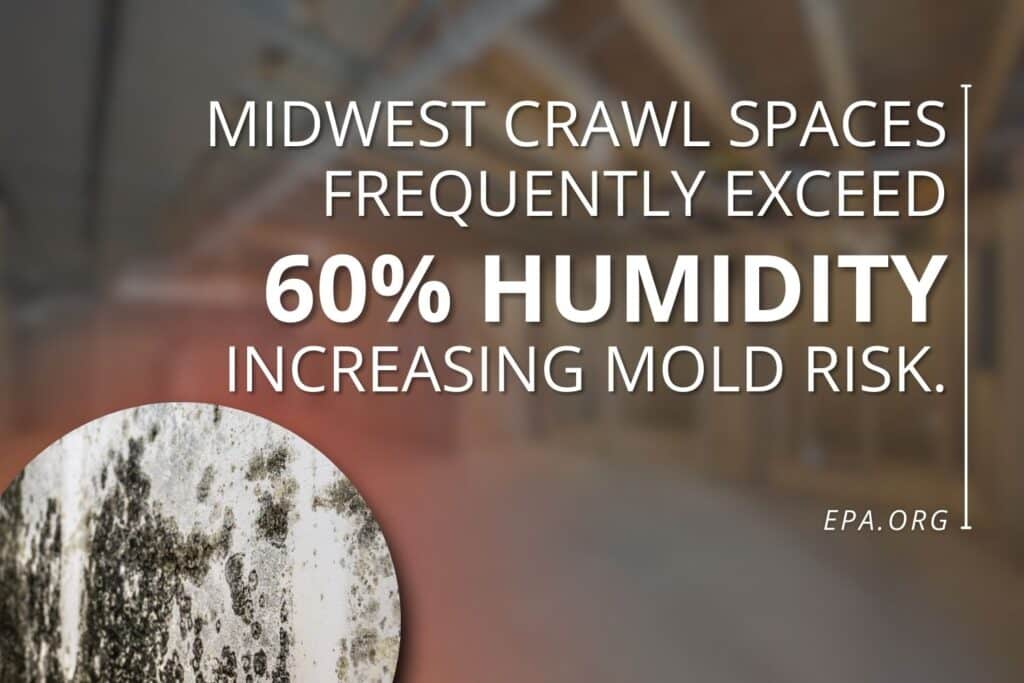
According to the EPA, keeping humidity below about 60 percent reduces moisture-related damage and mold risk.
It is important to note that a dehumidifier does not stop water from entering the crawl space. Instead, it supports long-term moisture control when used alongside drainage and encapsulation systems.
Structural Carpentry Repairs
If water has been present long enough to damage wood supports or framing, structural carpentry repairs may be needed. These repairs restore strength and stability before moisture control systems are installed.
Addressing structural issues first ensures that moisture solutions are effective and long-lasting.
Matching Conditions to the Right Solution
Different crawl space conditions require different approaches.
| Crawl Space Condition | What It Usually Means | Common Professional Solution |
| Standing water after rain | Poor drainage or groundwater pressure | Interior drainage system |
| Damp soil year round | Ground moisture | Encapsulation |
| High humidity without leaks | Air infiltration | Dehumidifier system |
| Soft or uneven floors | Structural damage | Structural carpentry repairs |
| Musty odors indoors | Moisture migration | Combined moisture control |
This is why inspections matter before choosing a solution.
How Crawl Space Water Affects Indoor Air Quality
Air from the crawl space often moves upward into the home.
According to the EPA, a significant portion of the air in the lower levels of a home can originate from below-grade spaces. When moisture is present, it can increase indoor humidity and contribute to odors and discomfort.
Proper crawl space moisture control improves both structural health and indoor air quality.
Other Questions Homeowners Ask
Is crawl space water common in Central Ohio?
Yes. Soil conditions and seasonal weather make crawl space moisture a frequent issue in the Columbus area.
Can water in a crawl space affect home value?
Yes. Moisture issues discovered during inspections often influence negotiations and repair decisions.
Will a dehumidifier alone fix the crawl space water?
No. A dehumidifier controls humidity but does not stop water entry.
When to Call a Professional
You should consider reaching out to a professional when:
- Water is visible or pooling beneath the home
- Moisture returns after rainfall
- Floors feel uneven, bouncy, or soft
- Musty odors are noticeable indoors
- A home inspection notes crawl space concerns
- You are buying or selling a home
Professional evaluation helps determine the cause of the problem and which solutions make sense for your home, rather than relying on guesswork or temporary fixes.
Conclusion
Water in a crawl space is a warning sign that moisture is not being properly managed around the home. In Central Ohio, this is a common issue, but it is one that can be addressed with the right inspection and solutions.
Buckeye Basement Solutions helps homeowners throughout the Columbus area identify crawl space water problems and apply targeted repairs that protect the structure, improve air quality, and prevent future damage.