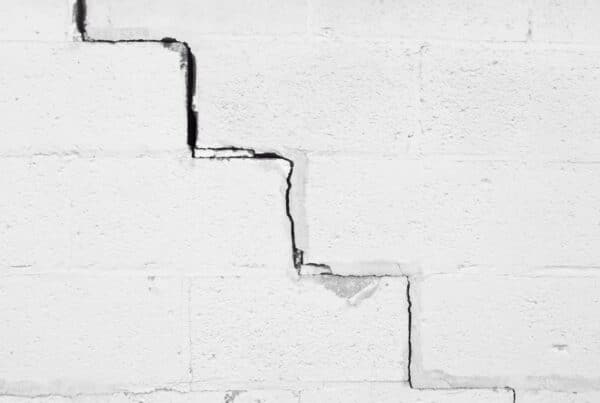
Water seeping through a basement wall almost always means groundwater outside your foundation is under pressure and pushing through cracks, pores, or joints in the concrete or block.
It is one of the most common calls the Buckeye Basement Solutions team gets across Central Ohio, especially after a hard rain or a fast spring thaw.
The good news: a weeping basement wall is fixable once you know what is driving the water in.
This guide walks you through the real causes, how to tell seepage from condensation, quick steps to take right now, and the longer-term fixes that actually keep a wall dry.
What Does It Mean When Water Is Weeping Through a Basement Wall?
A wall that is “weeping” is letting water migrate through the masonry itself, so the surface looks damp, beaded, or streaked even when there is no obvious puddle.
Homeowners describe it a few ways: a wet stripe down the block, water weeping from a crack, or the whole wall sweating during a storm.
All of these point to the same thing. Water is finding the path of least resistance through your foundation and showing up on the inside.
There is an important difference between two words people use interchangeably:
- Seepage is the slow migration of water through porous concrete, hairline cracks, or mortar joints. It often shows up as damp patches, a weeping wall, or water at the floor-wall seam.
- Leaking is a faster, heavier flow through a larger crack, gap, or pipe penetration.
Both matter. Even slow seepage keeps the wall wet long enough to grow mold and soften materials, so a weeping wall is not something to wait out.
Why Is Water Seeping Through My Basement Wall?
Water seeps through a basement wall when the soil outside holds more water than it can drain, and that water pushes inward through any opening it can find.
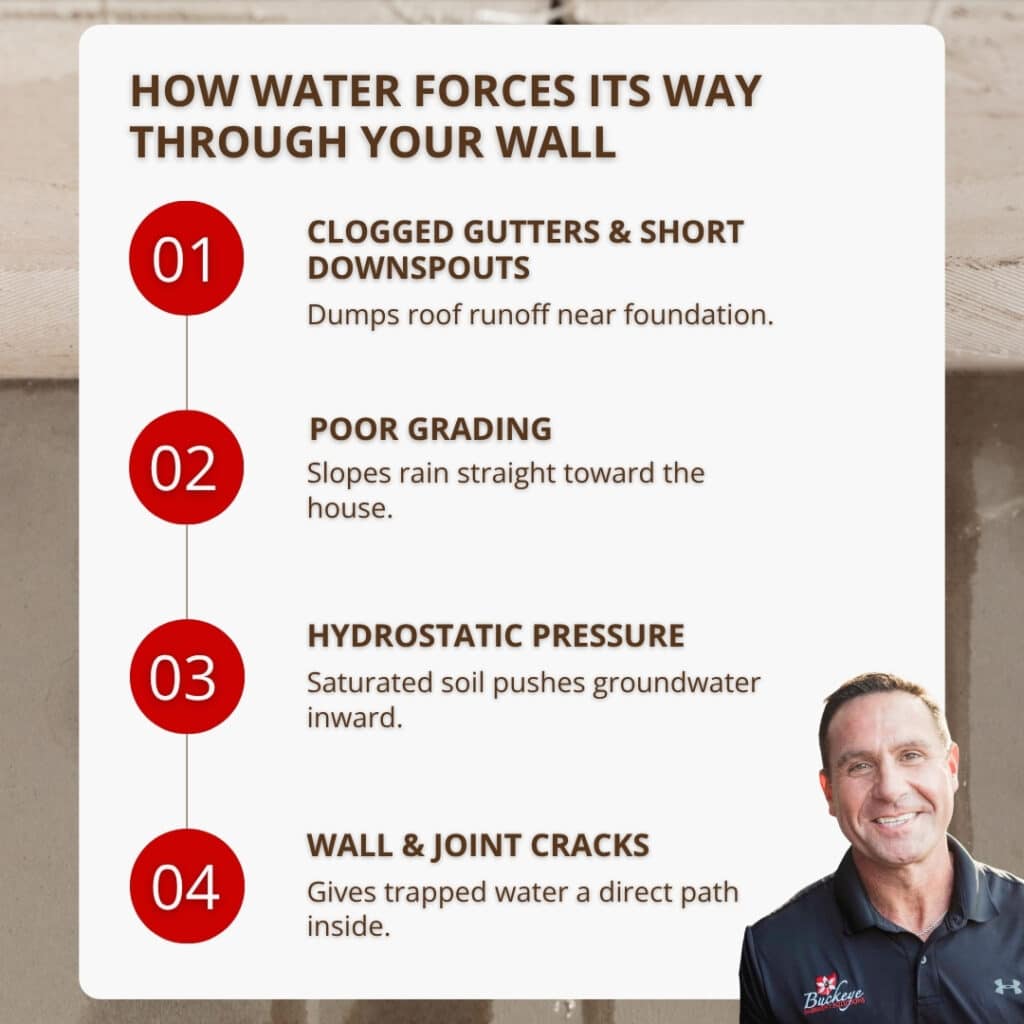
The pressure has a name: hydrostatic pressure. Here are the causes we see most often in Columbus-area homes.
Hydrostatic pressure from saturated soil
When rain or snowmelt soaks the ground faster than it can drain, water collects against your foundation like a bowl filling up. That trapped water presses on the wall from every side and forces moisture through the concrete. The EPA notes that water commonly enters a home by seeping through basement floors and walls, which is why moisture control starts with managing the water outside.
Central Ohio makes this worse because much of the region sits on dense clay soil that holds water for days and expands when saturated, keeping steady pressure on the wall long after the storm ends.
Foundation and wall cracks
Concrete is porous, and even a wall that looks solid is full of microscopic openings. Add a shrinkage crack, a settlement crack, or a gap around a pipe, and water has a direct route in. No crack is too small to matter. A hairline opening still works like an open door once the soil outside is saturated.
Poor grading and drainage around the home
If the ground slopes toward your house instead of away from it, rain drains straight into the soil against your foundation. The same thing happens when your yard is flat and stays soggy after storms. Both keep the soil around the wall wet and under pressure.
Clogged gutters and short downspouts
Gutters and downspouts exist to carry roof water away from the house. When they clog or dump water right at the foundation, they concentrate huge volumes of rain exactly where you do not want it. Downspouts should discharge several feet away from the wall, ideally ten feet or more.
Failed exterior waterproofing
Many older homes were sealed on the outside with a tar coating when they were built. That coating breaks down over the decades, and once it fails, water works through the smallest pores in the wall.
Window wells and wall penetrations
Basement windows, window wells that fill with water, and the gaps where pipes pass through the wall are all common entry points that get overlooked.
Seepage or Condensation? Do the Foil Test First
Before you spend a dollar on repairs, confirm you actually have seepage and not condensation, because the two look alike and have completely different fixes. You can check this yourself with a simple test described in the National Park Service’s Preservation Brief 39.
- Tape a square of aluminum foil (or plastic sheeting) flat against the damp part of the wall.
- Seal all four edges with tape so no air gets behind it.
- Leave it in place for 24 to 48 hours, then peel it off.
Now read the result:
- Moisture on the room-facing side means condensation. Warm, humid basement air is hitting the cooler wall and releasing water. This is common in summer and is a humidity problem, not a leak.
- Moisture behind the foil, against the wall, means seepage. Water is migrating through the masonry from outside, and you have an active intrusion problem.
Knowing which one you have saves you from throwing a dehumidifier at a seepage problem or waterproofing a wall that just needs better air control.
What to Do Right Now About a Weeping Basement Wall
Take these steps first to limit damage while you plan a permanent fix. These are safe for any homeowner to do.
- Dry the area fast. Mop or wet-vac any standing water and run fans and a dehumidifier. The EPA advises drying wet areas within 24 to 48 hours to keep mold from taking hold. (EPA guidance)
- Move belongings off the floor and away from the wall. Cardboard, fabric, and wood soak up moisture and grow mildew quickly.
- Clean your gutters and check downspouts. Clear clogs and add extensions so water discharges well away from the foundation.
- Look at your grading. If soil slopes toward the house, adding soil to redirect water away is a cheap early win.
- Rule out plumbing. If the water is clear and constant even in dry weather, shut off your main supply for a few hours. If the water stops, you have a plumbing leak and should call a plumber, not a waterproofer.
These steps buy you time and may reduce minor seepage, but they rarely fix hydrostatic pressure on their own. For that, you need to address the water at its source.
How to Permanently Stop Water From Seeping Through Basement Walls
Lasting fixes fall into two buckets: managing the water outside and relieving the pressure inside. The right mix depends on your soil, your foundation, and how severe the seepage is.
Exterior solutions
- Fix grading and extend downspouts so surface water drains away from the foundation.
- Exterior waterproofing membrane. For heavy or chronic seepage, sealing the outside of the foundation stops water before it reaches the wall.
- Exterior French drain. A drain in the soil intercepts groundwater and carries it away, lowering the pressure against the wall.
Interior solutions
- Interior drainage system with a sump pump. At Buckeye Basement Solutions, we most often waterproof from the inside with no outside digging. A trench is cut along the interior perimeter, a drainage pipe is installed, and it directs groundwater to a sump pump that lifts the water up and out of the home. This relieves hydrostatic pressure instead of just hiding it.
- Crack repair by injection. Structural cracks are sealed with epoxy, which bonds the concrete back together, while non-structural cracks are sealed with flexible polyurethane to block moisture.
- Vapor barriers and coatings on the interior wall help manage residual dampness and humidity.
One thing to keep in mind: surface sealers and waterproof paint alone will not hold back water that is under pressure. The pressure simply finds the next weak point.
That is why a drainage system that gives water a controlled path out usually outlasts a coating. If you want the full comparison of the two main interior systems, our guide on choosing between a sump pump and an interior French drain breaks it down.
Related Questions to Explore
Is water seeping through a basement wall serious?
Yes. Even slow seepage keeps the wall wet long enough to grow mold, soften materials, and widen small cracks into bigger structural problems over time. Water intrusion also raises indoor humidity, and the EPA notes that a large share of the air in your upper floors comes up from the basement. Catching it early is always cheaper than repairing water damage later. Our overview of the risks and signs of basement water seepage goes deeper into what is at stake.
Can I fix water seeping through a basement wall myself?
You can handle the first-response steps yourself: drying the area, cleaning gutters, extending downspouts, and correcting grading. These help and sometimes reduce minor seepage. But hydrostatic pressure, structural cracks, and chronic weeping walls need professional diagnosis and a drainage or waterproofing system. Sealing a wall that is under pressure without relieving that pressure usually fails.
Why is water coming in where the basement wall meets the floor?
Water at the floor-wall joint (the cove joint) is one of the most common seepage points, and it usually signals subsurface groundwater under pressure rather than a surface leak. Because the pressure comes from below and beside the slab, a surface patch rarely holds. An interior drainage system that captures water at the perimeter is the typical long-term fix.
How do I tell a wall leak from condensation?
Run the foil test above. Moisture behind the foil means water is seeping through the wall from outside. Moisture on the room side means condensation from humid air, which you manage with ventilation and a dehumidifier rather than waterproofing.
Does homeowners insurance cover a seeping basement wall?
Usually not. Standard policies typically exclude gradual water intrusion and groundwater seepage, treating them as maintenance issues rather than sudden accidents. Coverage varies by policy, so check with your insurer. This is one more reason to fix the source early rather than let seepage become expensive water damage.
When to Call a Professional
Call a waterproofing professional when the foil test confirms seepage, when water returns every time it rains, or when you see any of these warning signs:
- Damp or beaded walls, water stains, or a white powdery residue called efflorescence
- A musty smell that never fully goes away
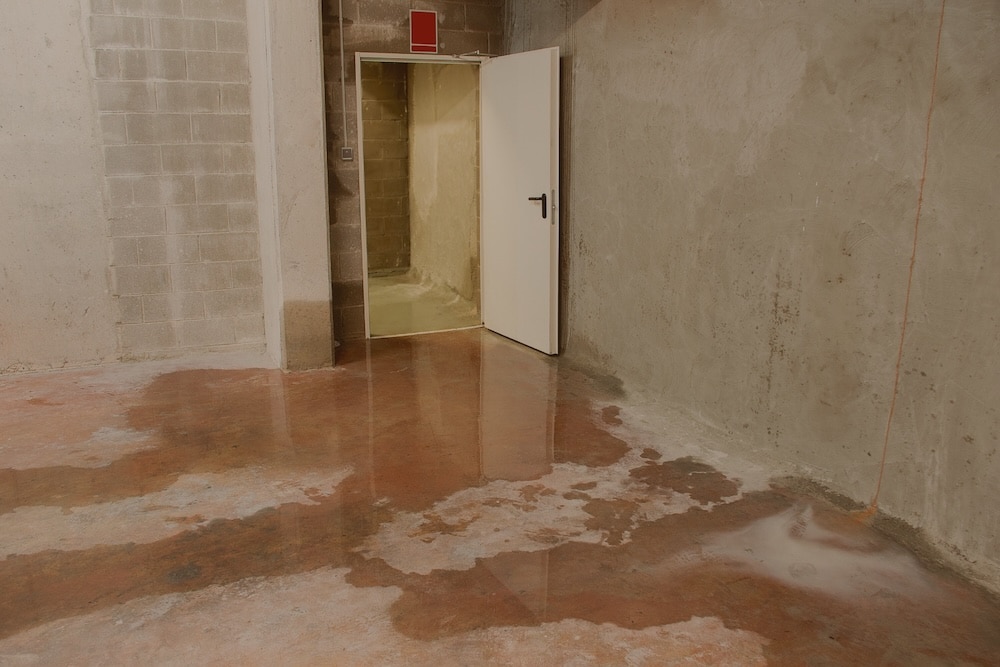
- Water pooling where the wall meets the floor
- Horizontal cracks, stair-step cracks in block walls, or walls that look like they are bowing inward, which can signal structural stress and should be checked right away
Buckeye Basement Solutions is locally owned and operated, licensed, insured, and bonded, with a transferable warranty that carries over for real estate transactions.
We start with a full inspection to find the true source of the water, then build a custom plan for your home and soil conditions rather than selling a one-size-fits-all product.
If you are seeing a weeping wall in the Columbus area, our basement waterproofing team can diagnose it and stop it for good.
Conclusion
A weeping basement wall is a warning worth acting on, but it is a solvable problem. Keep these takeaways in mind:
- Water seeps through basement walls because saturated soil creates hydrostatic pressure that pushes moisture through cracks, pores, and joints.
- Confirm seepage versus condensation with the foil test before you spend anything.
- Surface coatings alone will not hold back water under pressure. Relieving the pressure with drainage is what lasts.
If water is weeping through your basement wall, do not wait for the next storm to make it worse. Contact Buckeye Basement Solutions for a free estimate and a plan to keep your basement dry.