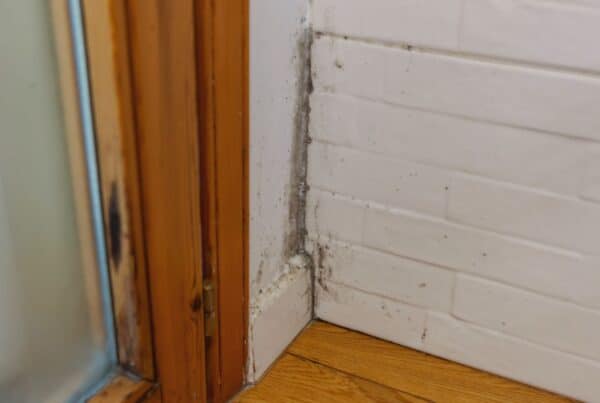
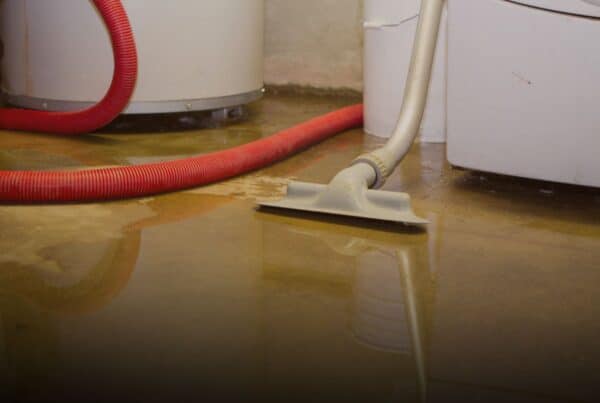
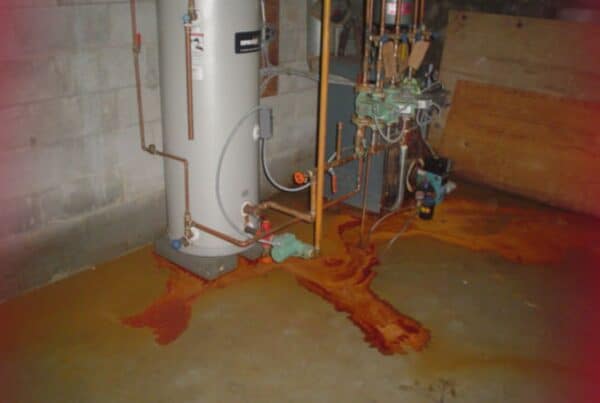
When homeowners notice damaged wood, discoloration, or musty smells in a basement or crawl space, the conversation often turns to mold. In many cases, however, the problem is not mold alone. Dry rot is another moisture-related issue that can look similar at first but carries very different risks.
In Central Ohio homes, dry rot and mold often develop under the same conditions. Long-term moisture, poor drainage, and high humidity create an environment where both can thrive.
The key difference is how they affect the home. Understanding the difference between dry rot and mold helps you recognize when cosmetic damage has crossed into a structural concern and why moisture control is the real issue behind both.
What Dry Rot Actually Is
Dry rot is a form of wood decay caused by fungi that feed on the structural components of wood.
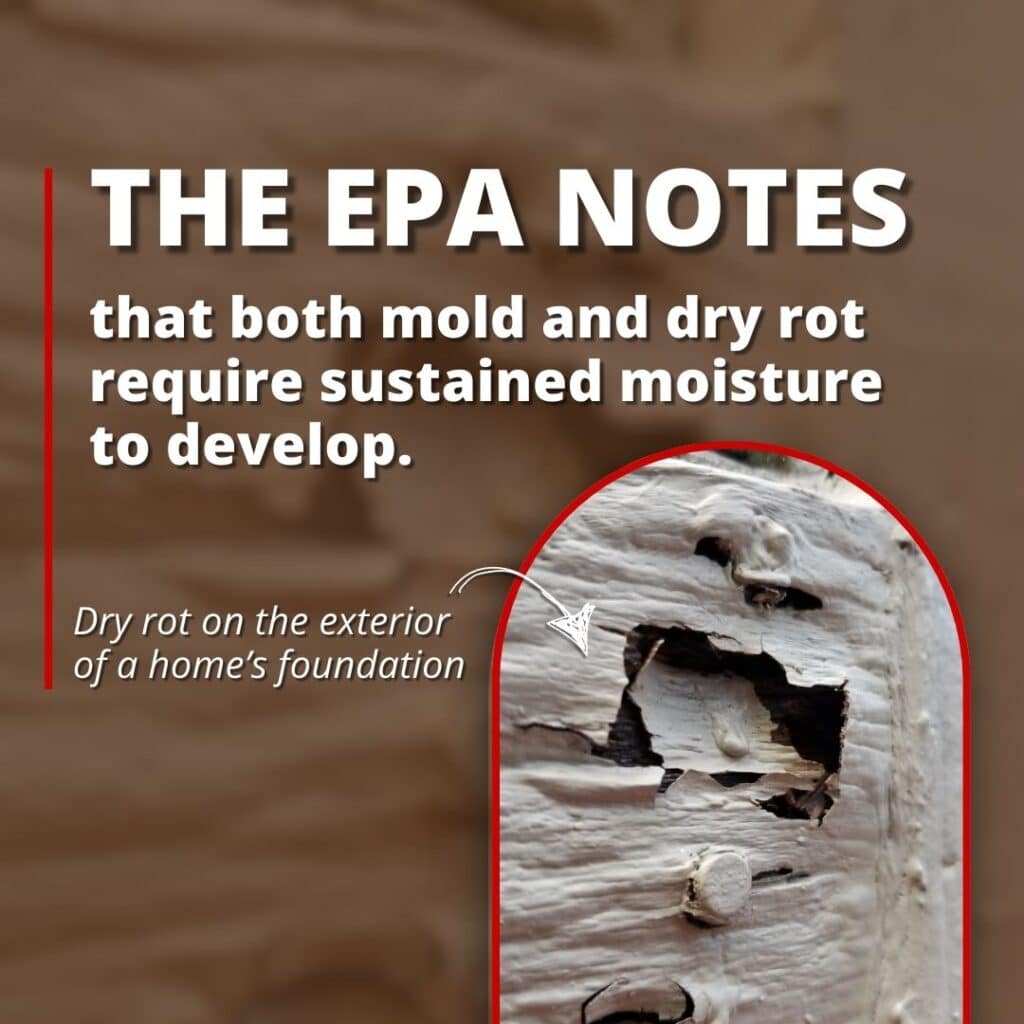
Despite the name, dry rot requires moisture to develop. It typically begins when wood stays damp for extended periods, even if the moisture source is not obvious.
As dry rot fungi spread, they break down the cellulose and lignin that give wood its strength. This process weakens the wood from the inside, often before surface damage becomes visible.
Wood affected by dry rot may look intact at first, but can crumble or break apart once disturbed.
In homes around Columbus and Central Ohio, dry rot is commonly found in basements, crawl spaces, rim joists, sill plates, and framing near foundation walls where moisture exposure is consistent.
What Mold Is and How It Behaves Differently
Mold is a type of biological growth that develops on surfaces when moisture is present. Unlike dry rot, mold does not consume structural wood fibers in the same way. It grows on the surface of materials such as wood, drywall, insulation, and concrete.
Mold often appears as dark staining, spotting, or fuzzy growth. It spreads by releasing spores into the air, which can move throughout the home. While mold does not typically cause immediate structural failure, it can still damage materials over time and significantly impact indoor air quality.
In basements and crawl spaces, mold growth almost always points to excess humidity, water intrusion, or poor ventilation.
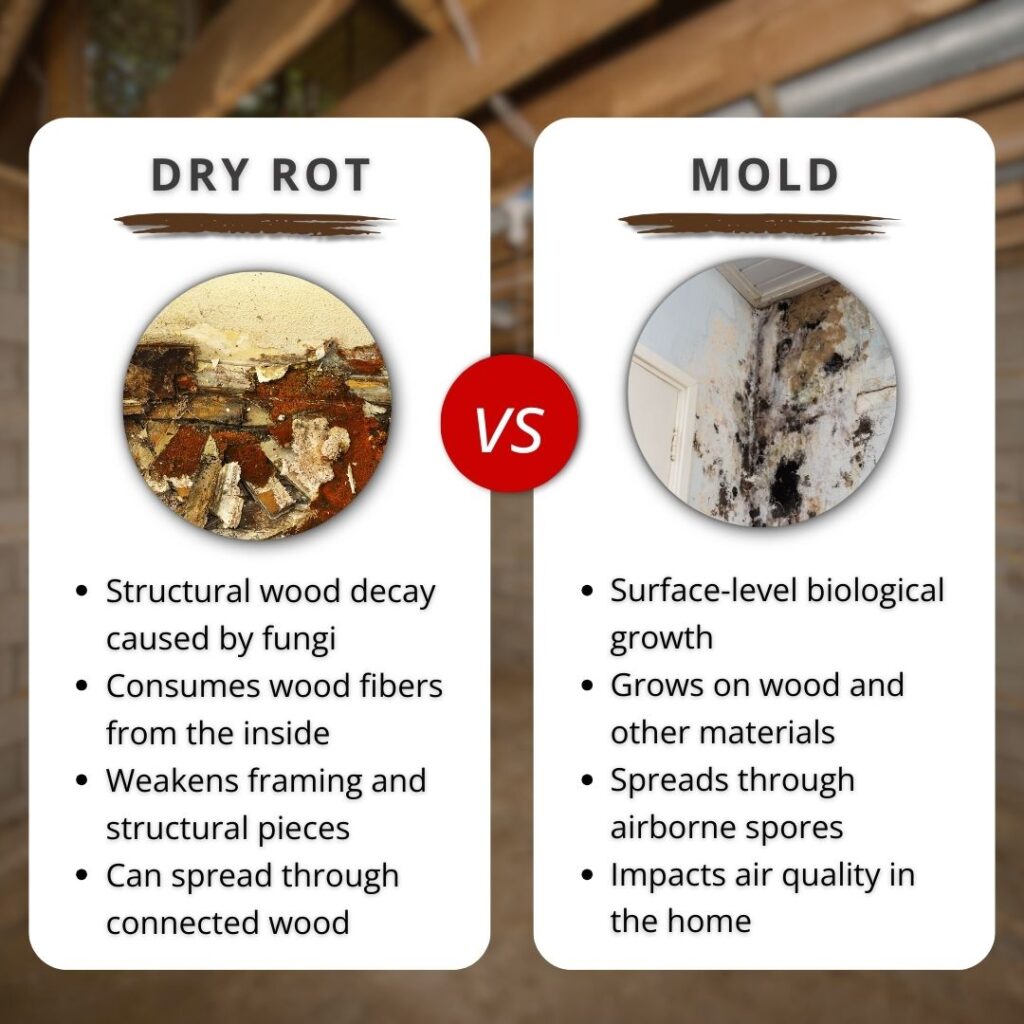
Why Dry Rot and Mold Are Commonly Confused
Dry rot and mold often appear in the same locations because they thrive under similar conditions. Both require moisture, limited airflow, and organic materials to grow.
Homeowners may notice symptoms like:
- Discolored or stained wood
- Musty or earthy odors
- Soft or deteriorating materials
- Visible fungal growth on surfaces
Without a proper evaluation, it is easy to assume all wood-related damage is mold. In reality, dry rot may be present behind the scenes, quietly weakening structural components while mold remains more visible.
This is why professional inspections and moisture assessments are critical before deciding how to address the problem.
How Dry Rot Affects Structural Integrity
Dry rot is a structural issue first and foremost. As the fungi break down wood fibers, the material loses its ability to support weight and resist movement.
Over time, dry rot can compromise:
- Floor joists and beams
- Rim joists along foundation walls
- Support posts and columns
- Subflooring
- Stair framing
As these components weaken, homeowners may notice sagging floors, uneven surfaces, doors that no longer close properly, or shifting interior finishes. These are signs that load-bearing elements may be losing strength.
If dry rot is left untreated, repairs often become more invasive and expensive as more structural material is affected.
How Mold Impacts Health and Living Conditions
While mold does not usually cause structural failure, it creates other serious concerns. Mold spores can circulate through the home, especially when basements or crawl spaces are connected to living areas through air movement.
Persistent mold growth can lead to:
- Increased allergy symptoms
- Respiratory irritation
- Headaches or sinus issues
- Ongoing musty odors
- Reduced indoor comfort
Mold problems tend to worsen over time unless moisture is controlled. Cleaning visible mold without addressing humidity or water intrusion often results in regrowth.
For many homeowners, mold is the first visible warning sign that a moisture problem exists deeper in the home.
Moisture Is the Root Cause of Both Problems
Dry rot and mold do not appear on their own. Moisture is always the driving factor.
In Central Ohio homes, moisture commonly enters through:
- Foundation wall cracks
- Poor exterior grading or drainage
- Leaking basement walls
- Crawl spaces without vapor barriers
- Condensation from temperature differences
Once moisture becomes trapped, wood framing and organic materials create ideal conditions for fungi and mold to develop. Treating the visible damage without controlling moisture often leads to repeated problems.
This is why Buckeye Basement Solutions focuses on identifying how moisture is entering the home and how it is moving through the structure.
Why Basements and Crawl Spaces Are High-Risk Areas
Basements and crawl spaces are naturally vulnerable because they are below or close to ground level. Soil moisture constantly presses against foundation walls, especially during wet seasons common in Central Ohio.
Additional contributing factors include:
- Aging waterproofing systems
- Inadequate drainage around the foundation
- Poor airflow and ventilation
- Open crawl spaces are exposed to humid air
When moisture becomes trapped in these areas, wood framing, sill plates, and floor systems are exposed to long-term damp conditions. Over time, this increases the likelihood of both dry rot and mold developing together.
Why Dry Rot Should Never Be Ignored
Dry rot is not a surface issue and is not something that improves on its own. Once wood fibers begin to break down, the damage continues as long as moisture remains present.
Ignoring dry rot can lead to:
- Progressive structural weakening
- Increased repair scope
- Higher long-term costs
- Safety concerns related to load-bearing components
Early identification allows homeowners to address both the damaged materials and the moisture source before the problem spreads further through the structure.
Why Mold Often Signals a System Failure
Mold growth usually means one or more systems designed to control moisture are not working properly.
This may involve:
- Failing or missing waterproofing systems
- Inadequate drainage around the foundation
- Poor crawl space design
- High indoor humidity without dehumidification
Surface-level mold treatments do not fix these issues. Without addressing the underlying system failure, mold growth often returns.
Whole-home moisture control is essential for lasting results.
How Professional Inspections Clarify the Real Risk
A professional inspection of the basement and foundation will help determine whether damage is cosmetic, environmental, or structural.
During an evaluation, professionals assess:
- Visible wood deterioration
- Moisture levels in materials
- Humidity and air movement
- Foundation conditions
- Drainage and waterproofing systems
This approach helps homeowners understand whether they are dealing with mold, dry rot, or both, and what level of repair or system improvement is needed.
How Buckeye Basement Solutions Approaches Long-Term Solutions
Buckeye Basement Solutions focuses on addressing moisture at its source rather than offering short-term fixes.
Based on inspection findings, solutions may include:
- Basement waterproofing systems
- Foundation repair services
- Crawl space encapsulation
- Whole-home or basement dehumidifier systems
- Structural repairs when wood damage is present
By controlling moisture and stabilizing affected areas, homes are better protected against future dry rot and mold growth.
Related Frequent Questions
Why are moisture problems common in basements or crawl spaces?
Both basements and crawl spaces are close to ground level, where soil moisture and pressure, poor drainage, or seasonal weather changes can introduce water and humidity into the structure.
How do moisture problems impact a home beyond visible damage?
Long-term moisture can weaken structural materials, increase indoor humidity, reduce energy efficiency, and contribute to ongoing maintenance issues throughout the home.
Are crawl space issues connected to upper-floor problems?
Yes. Crawl spaces influence the floors above them. Moisture and air movement from below can affect flooring stability, indoor comfort, and humidity levels in living areas.
Why do some basement repairs fail over time?
Repairs that address surface symptoms without correcting drainage, waterproofing, or humidity control often do not last. Moisture continues to enter the space, allowing problems to return or spread.
When to Call a Professional
Moisture-related problems rarely resolve on their own. Knowing when to involve a professional helps prevent minor concerns from turning into structural or air quality issues.
You should get a professional evaluation if:
- Wood in a basement or crawl space feels soft, brittle, or deteriorated
- Musty odors persist even after cleaning or ventilation attempts
- Mold continues to return after surface removal
- Floors feel uneven, bouncy, or unsupported
- Water intrusion, dampness, or high humidity is ongoing
Early evaluation allows homeowners to address the root cause of damage, protect structural components, and avoid repeated repairs that only treat symptoms.
Conclusion
Dry rot and mold are often discussed together, but they affect homes in very different ways. Mold primarily impacts air quality and comfort. Dry rot directly compromises structural strength.
In Central Ohio homes, both problems usually point to long-term moisture exposure. Addressing visible damage without solving moisture issues leads to repeated problems and escalating repair costs.
Buckeye Basement Solutions helps homeowners identify the real cause behind dry rot and mold, protect their home’s structure, and implement long-term moisture control solutions that last.