A dehumidifier helps with mold by removing the moisture that mold needs to grow. It will not kill existing mold or fix an active water source, but it is one of the most effective tools for preventing new growth and stopping conditions that let it spread.
If your Columbus home has a damp basement or crawl space, controlling humidity is one of the first steps toward protecting your air quality and your structure.
Why Moisture Is the Real Mold Problem
Mold needs three things to grow: a surface, a food source like wood or drywall, and moisture. You cannot easily control the materials inside your home, but you can control moisture.
When relative humidity climbs above 60%, mold becomes much more likely to take hold. In a Columbus basement or crawl space, humidity can hit 70% or higher during the spring thaw and rainy season. Ohio’s climate is not kind to basements. Warm, humid air pushes through porous foundation walls and rises from the ground, making lower levels of the home naturally wetter than the rest.
A dehumidifier pulls moisture out of the air and keeps relative humidity in a safe range, typically between 30% and 50%. Below that threshold, mold has a much harder time getting started.
What a Dehumidifier Will and Will Not Do
Here is the honest breakdown…
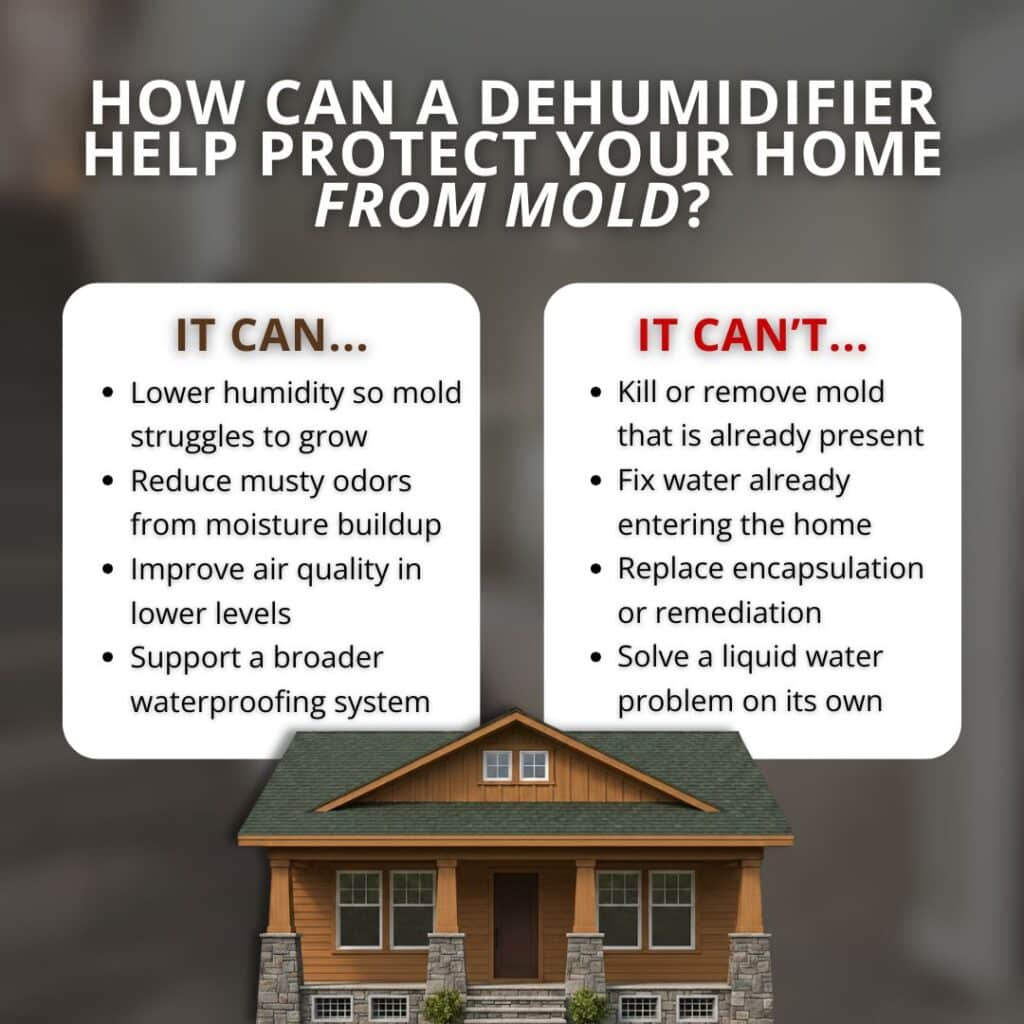
It helps by:
- Lowering humidity to levels where mold struggles to grow
- Reducing the musty smell associated with moisture buildup
- Supporting better air quality by limiting conditions that produce mold spores
- Working alongside waterproofing to keep a space consistently dry
It will not:
- Kill or remove existing mold colonies
- Fix water intrusion through walls, floor seams, or foundation cracks
- Substitute for waterproofing, encapsulation, or professional remediation
- Work effectively when the moisture source is liquid water rather than humidity
If you already have visible mold in your basement, a dehumidifier alone is not the answer. The mold itself needs to be addressed, and so does whatever allowed moisture to build up in the first place.
Humidity vs. Water Intrusion: Two Different Problems
Not all basement moisture is the same, and treating it the same way is a common mistake.
- Humidity is airborne moisture coming from outdoor air, the ground below, and everyday activity inside the home. A dehumidifier is well-suited for this.
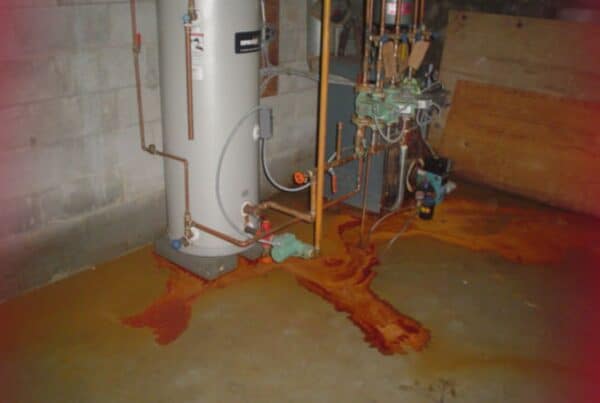
- Water intrusion is liquid water entering through cracks in the foundation, floor seams, or poorly sealed walls. No dehumidifier can compensate for a wall that is actively leaking. Running one in a wet basement with an unresolved water source will just cause the unit to run constantly without solving anything.
If you see standing water, wet spots on walls after rain, or white chalky deposits (efflorescence) on your foundation, that points to a water intrusion issue. Basement waterproofing should come first.
What to Look for in a Basement Dehumidifier
Standard consumer units often struggle in basements. These spaces tend to be cooler, larger, and more consistently humid than the rooms a typical box-store dehumidifier is built for.
A few things worth prioritizing:
- Capacity: At least 50 to 70 pints per day for a typical basement
- Temperature range: Rated to operate at lower temperatures, ideally down to 41°F
- Continuous drainage: A built-in pump or drain hose beats emptying a reservoir manually
- Energy efficiency: Basement dehumidifiers run frequently; an Energy Star unit costs less over time
For crawl spaces specifically, a standard unit is often not the right fit. Crawl spaces benefit most from encapsulation paired with a purpose-built crawl space dehumidifier designed for that environment.
Clean Air Dehumidifier Systems vs. Store-Bought Units
There is a real difference between a portable unit and a whole-home clean air dehumidifier system. Homes breathe from the ground up. Air from the basement and crawl space circulates into living areas above, which means what happens down there affects your whole home.
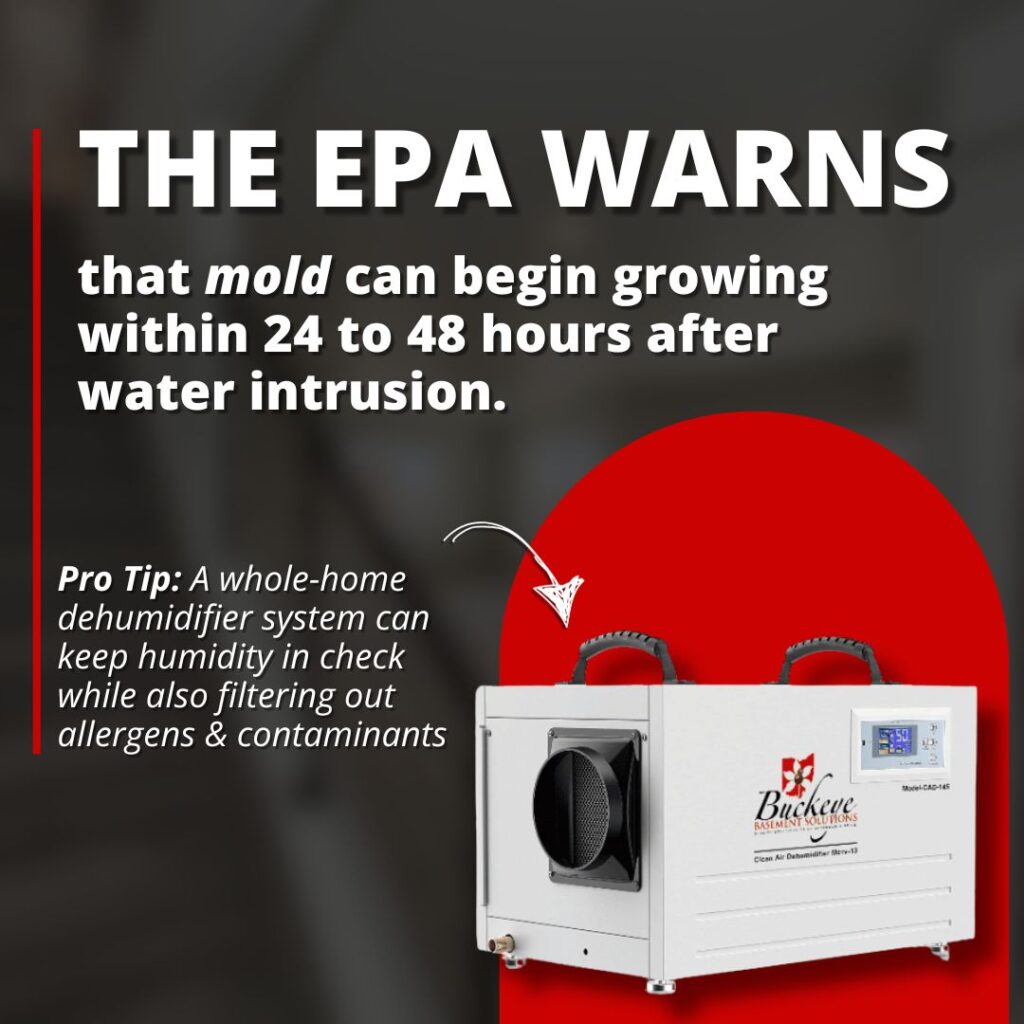
A professionally installed clean air dehumidifier system does more than lower humidity. It filters air before it moves through your HVAC system, removing contaminants and allergens along the way.
At Buckeye Basement Solutions, we install these systems specifically for Columbus basements and crawl spaces, and they are built to run continuously without the manual upkeep a portable unit requires.
A store-bought unit sitting in the corner is a short-term tool. A properly installed system is part of a complete moisture management strategy.
When Mold Is Already Present
If you already see mold, address it in this order before relying on a dehumidifier:
- Identify whether the moisture source is humidity, water intrusion, or both
- Have existing mold professionally remediated, especially if the affected area exceeds 10 square feet
- Resolve the water or drainage problem, driving moisture into the space
- Install a dehumidifier system to keep conditions stable going forward
Skipping to step four without handling the first three gives homeowners a false sense of security while the underlying problem continues.
Humidity and Mold in Crawl Spaces
Crawl spaces deserve specific attention. An unencapsulated crawl space in the Columbus area pulls in Ohio’s outdoor air year-round. In summer, warm, humid air sits in a cool space, creating ideal conditions for mold on wood joists, beams, and subflooring.
Crawl space encapsulation seals the ground and walls with a thick vapor barrier, cutting off the primary moisture source. Paired with a crawl space dehumidifier, the space stays consistently dry regardless of what the weather is doing outside.
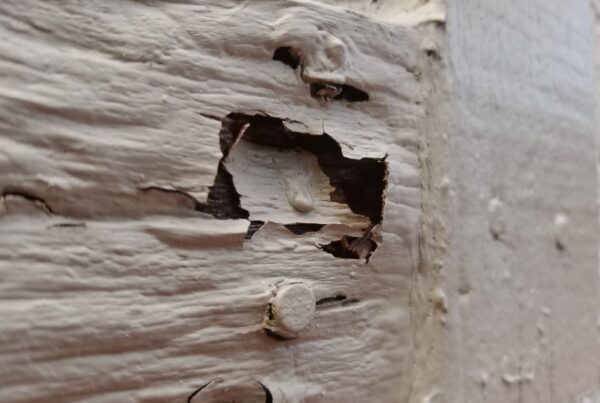
Long-term moisture in a crawl space also connects directly to structural issues. Mold and moisture on floor joists can lead to dry rot, sagging floors, and compromised structural support. Addressing humidity early is far less expensive than repairing structural damage later.
Signs Your Home Has a Humidity Problem
You may not see mold right away, but your home will often give other signals that moisture levels are too high:
- Musty or earthy smells from the basement or crawl space
- Condensation on basement walls, pipes, or windows
- Warping or swelling in wood trim, doors, or flooring
- White chalky deposits on concrete or brick walls
- Allergy symptoms that worsen at home
- Paint peeling or bubbling on the basement walls
An inexpensive hygrometer gives you a real humidity reading. Consistent readings above 60% are worth taking seriously.
Related Questions
Can mold in a basement affect the rest of the house?
Yes. Because air moves upward from the basement into living areas, mold spores from below can circulate throughout the home. This is why basement moisture control is both a structural issue and a health concern for the entire household.
What is the difference between mold and dry rot?
Mold grows on surfaces and primarily affects air quality. Dry rot is a form of wood decay caused by fungi that break down the structural fibers of wood over time. Both develop under similar conditions: excess moisture and limited airflow. Basements and crawl spaces in Central Ohio are especially prone to both when moisture is left unaddressed.
How does water intrusion connect to foundation damage?
Water that enters a basement does not stay contained. It can saturate surrounding soil, increase lateral pressure on foundation walls, and accelerate cracking or bowing over time. Resolving drainage and waterproofing issues protects the foundation, not just the interior.
What does crawl space encapsulation actually involve?
Encapsulation seals the crawl space floor and walls with a thick vapor barrier, blocking ground moisture from entering the space. It is often paired with a crawl space dehumidifier and sometimes a sump system for areas with higher water exposure.
When does a sump pump factor into mold prevention?
A sump pump manages liquid water that collects in or around the basement. If water intrusion is part of the moisture problem, a sump system works alongside a dehumidifier to keep the space dry. One handles water; the other handles humidity. Together, they address both sides of the issue.
When to Call a Professional
A dehumidifier is a useful preventive tool, but it is not a complete solution on its own. Contact a professional when:
- You see visible mold growth on walls, joists, or materials
- Water pools in the basement or on the walls after rain
- A musty smell persists even after cleaning or ventilation
- Floors feel uneven, bouncy, or soft in areas
- A consumer dehumidifier runs constantly, but the humidity stays high
At Buckeye Basement Solutions, a free inspection identifies exactly what is driving moisture in your home and what combination of solutions will actually fix it, whether that is waterproofing, encapsulation, a clean air dehumidifier system, or structural repairs.
Conclusion
A dehumidifier helps with mold by taking away the one thing mold needs most: moisture. But it works best as part of a complete plan. Columbus basements and crawl spaces face real humidity challenges year after year, and a store-bought unit can only do so much when the underlying conditions go unaddressed.
If your home is showing signs of moisture, mold, or damage below grade, contact Buckeye Basement Solutions to schedule an inspection and find out what your home actually needs to stay dry and healthy.