A slab foundation is a flat layer of concrete poured directly on the ground, with no basement or crawl space underneath. The slab works as the floor of the house and as part of what holds up the walls.
If you own a slab home, or you are thinking about buying one, you likely have questions about cracks, plumbing, and how it compares to other foundations.
At Buckeye Basement Solutions, we help Columbus-area homeowners with foundation problems. This guide covers how they work, their pros and cons, and what to watch for in Ohio.
What Is a Slab Foundation?
A slab foundation, also called slab-on-grade, is a thick pad of concrete that rests on prepared soil. There is no open space below it.
The home sits on top, and the concrete spreads the weight of the house across the ground.
Here is how a slab house foundation is usually built:
- Clear and level the site. Crews remove plants and topsoil and shape the ground.
- Add a gravel layer. Gravel helps water drain and keeps moisture from wicking up into the concrete.
- Lay a vapor barrier. This is a plastic sheet that slows moisture from rising through the slab.
- Place plumbing and reinforcement. Drain lines are set before the pour. Steel bars (rebar) or wire mesh go in to add strength.
- Pour, finish, and cure the concrete. The concrete needs time to harden before the framing starts.
Penn State’s Housing Research Center covers these layers in its guide to slab-on-grade foundations, including the gravel break and vapor retarder that protect the concrete from ground moisture.
Types of Slab Foundations
Builders use a few different designs. The main types are:
- Monolithic slab: The floor and the footing are poured in one piece, with thicker edges that act as the footing.
- Stem wall (T-shaped) slab: The footing is poured first, a short wall is built on top, and the floor is poured inside it.
- Frost-protected shallow foundation: Insulation around the slab edge keeps the ground from freezing, so the footing does not need to go as deep.
- Floating slab: This type sits on the ground without being tied to the walls, so it can move on its own. You often see this in garages and basement floors.

Pros and Cons of Slab Foundations
Slab foundations cost less to build and go up faster than most other types, but they are harder to repair, and they do not fit every climate. Here is a side-by-side look.
| Pros | Cons |
|---|---|
| Lower upfront cost, since there is less digging and fewer materials | Plumbing lines sit under or inside the concrete, so repairs can mean cutting into the floor |
| Faster to build | Cracks can form from soil movement, frost, or poor prep work |
| No crawl space to collect moisture or pests | Floors can feel cold, and heat can escape if the slab edge is not insulated |
| Flat, solid floor surface | No extra space below the house |
| Works well with in-floor heating | Hard to change later, and you cannot add a basement under an existing slab |
It has fewer parts that can go wrong, which is why many builders like it. The trade-off is that when something does go wrong, the problem is often hidden under your floor.
Slab vs. Crawl Space vs. Basement
A slab is the simplest and usually the cheapest to build. A crawl space gives you access to pipes and wiring.
A basement gives you the most room, and it also needs the most digging and the most waterproofing.
| Slab | Crawl space | Basement | |
|---|---|---|---|
| Space below the home | None | Low, tight space | Full-height living or storage space |
| Access to plumbing | Hard | Easy | Easy |
| Main moisture concern | Moisture rising through the slab | Humidity and standing water | Water seeping through walls and floors |
| Fit for freezing climates | Needs careful design | Common | Common |
| Upfront cost | Generally lowest | Middle | Generally highest |
Each type has its own maintenance needs. A fourth option, pier and beam, lifts the house on concrete posts and wood beams.
If your home has a crawl space instead, our guide on what a crawl space is and how to maintain it covers the basics.
Are Slab Homes Common in Ohio?
Slab homes are less common in Ohio than basements and crawl spaces, but they do exist. You will see them in additions, garages, and some ranch-style homes.
Cold winters and clay soil make slabs harder to get right here.
Central Ohio soil is mostly clay left behind by glaciers. It swells when it is wet and shrinks when it is dry. The region also goes through 28 to 35 freeze-thaw cycles a year.
That mix puts steady pressure on any foundation, including this one. Frost can lift the ground under the concrete, which is called frost heave, and it can crack the floor.
A slab in Ohio is not a bad choice if it is built with the right gravel base, drainage, and frost protection. It just leaves less room for shortcuts.
Common Slab Foundation Problems
The most common slab problems are cracks, uneven floors, and moisture. Some are cosmetic. Others point to soil movement under the house.
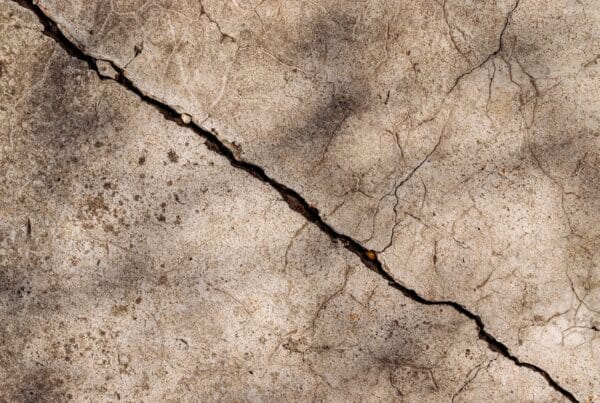
- Cracks in the floor or walls. Thin, hairline cracks are common as concrete cures. Wider cracks, stair-step cracks in brick or block, and cracks that keep growing deserve a closer look. Our post on warning signs of foundation cracks shows what to watch for.
- Uneven or sloping floors. If one part of the floor sits higher than another, the soil under the house may have shifted. This is often called settlement. Our article on sinking foundations explains the causes.
- Frost heave. Ground that freezes and expands can push the concrete up, then let it drop back unevenly.
- Moisture through the floor. Water can seep up through cracks or the joint where the floor meets the wall. See why water leaks into a basement after heavy rain for how soil and drainage play a role.
- Plumbing leaks under the slab. A “slab leak” is a plumbing problem, not a foundation failure. It can still soften the soil under the concrete and lead to damage over time.

How to Protect a Slab Foundation
The best way to protect a slab is to keep water away from it and keep the soil around it steady. Penn State’s housing researchers list surface water control, such as grading, gutters, and drain tile, as the first step for slab-on-grade homes.
Try these habits:
- Check the grade. The soil next to your house should slope away from the house.
- Extend downspouts. Send roof water several feet away from the foundation.
- Keep gutters clean. Clogged gutters spill water right at the base of the home.
- Watch the trees. Large roots can pull moisture from the soil and shift the ground under the house.
- Keep soil moisture even. Soil that swings between soaked and bone dry moves more. A soaker hose in dry spells can help, and good drainage helps in wet ones.
- Walk the perimeter each season. Look for new cracks, gaps, or spots where the concrete edge has pulled away from the ground.
Related Questions to Explore
What is a monolithic slab foundation?
A monolithic slab is poured all at once, with the footing and the floor made as a single piece of concrete. The edges are thicker to carry the load of the walls. It is a common choice for simple, single-level homes.
Are slab foundations bad?
No. This is a proven, widely used foundation. They are hard to repair when pipes or soil cause trouble, and they need careful design in places with freezing winters. A well-built one with good drainage can serve a home well.
How long do slab foundations last?
A well-built, well-maintained foundation like this can last for decades. Poor soil prep, standing water, and frost heave can shorten that. Regular checks for new cracks and drainage problems help you catch issues early.
Can pipes freeze in a slab foundation?
Pipes inside a slab are usually less exposed to cold air than pipes in an attic or crawl space. The risk is higher where lines come up at the edge of the slab or run outside the home. Insulate any exposed lines, and ask a plumber about your setup.
How do you fix a cracked slab foundation?
The fix depends on what caused the crack. A hairline crack may only need sealing. A crack that keeps growing, or one that comes with uneven floors, needs an inspection to find the cause first. Read more in our guide to repair options for a cracked foundation.
Is a slab better than a crawl space?
Neither is better in every case. It costs less and has no crawl space to manage. A crawl space makes pipes and wires easier to reach. The right pick depends on your soil, climate, budget, and how you plan to use the home.
When to Call a Professional
Call a foundation professional when you see cracks that keep growing, floors that slope or sag, or doors and windows that suddenly stick.
These can be early signs that the soil under or around your home is moving.
Signs to watch for in a home on a slab include:
- A crack where one side sits higher than the other
- Cracks that follow a stair-step pattern in brick or block
- Gaps between the floor edge and the wall or ground
- Water or dampness showing up on the floor with no clear plumbing source
- Tile that cracks or pops for no clear reason
Waiting rarely helps. Soil pressure and moisture keep working on a foundation season after season. A quick inspection can tell you whether you have a cosmetic crack or a structural issue.
Buckeye Basement Solutions is locally owned and owner-operated, and owner Brian Mastroianni oversees every project.
We do not use commissioned salespeople, and we offer a free inspection. Learn more about our foundation repair services in Columbus, OH.
Conclusion
A slab foundation is a simple, budget-friendly way to build a home, but it needs good drainage and careful design in a climate like Central Ohio’s.
- It is a concrete pad poured on the ground, with no basement or crawl space.
- It costs less and builds faster, but plumbing and soil problems are harder to reach.
- Water control, regular checks, and early action keep small cracks from turning into big repairs.
If you see warning signs in your foundation, basement, or crawl space, contact Buckeye Basement Solutions or call us to schedule a free inspection.