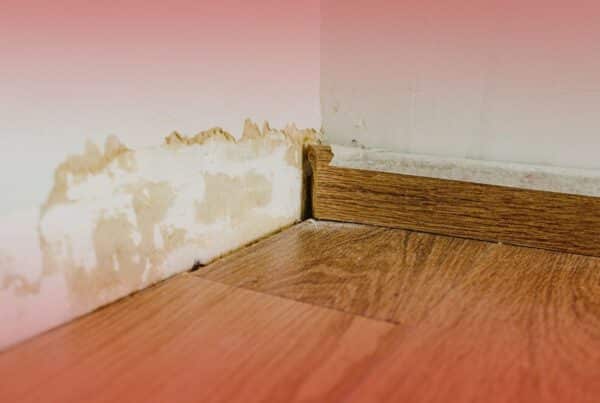
Understanding why brickwork fails, where it tends to fail first, and what fixing it means for your foundation, basement, and crawl space can save you from a much more expensive repair down the road.
A few cracks in your brickwork might not look like much. Maybe some crumbling mortar, a hairline crack along a basement wall, or bricks that seem to be shifting slightly. Most homeowners file it under “cosmetic” and move on.
In Columbus, Ohio, that is usually a mistake. Damaged brickwork is rarely just a surface problem. It is almost always a warning sign of something bigger happening below and around it.
Why Brickwork Fails in Columbus Homes
Columbus sits on clay-heavy soil. Clay expands when it absorbs moisture and contracts when it dries out. That constant cycle puts ongoing pressure on basement walls, foundation blocks, and masonry throughout your home’s structural envelope.
Ohio’s freeze-thaw cycles make it worse. Water gets into small cracks and mortar joints. When temperatures drop, that water expands and widens the crack. When it thaws, moisture settles deeper. Each cycle does a little more damage.
Common reasons brickwork deteriorates in Columbus:
- Hydrostatic pressure: saturated clay soil pushing against the basement and crawl space walls
- Freeze-thaw cycling: water expanding inside existing cracks over and over
- Aging mortar joints: bonds that weaken over time and open pathways for water
- Poor drainage: soil that stays wet too long around the foundation perimeter
- Foundation settlement: shifting that puts stress on the brickwork above and around it
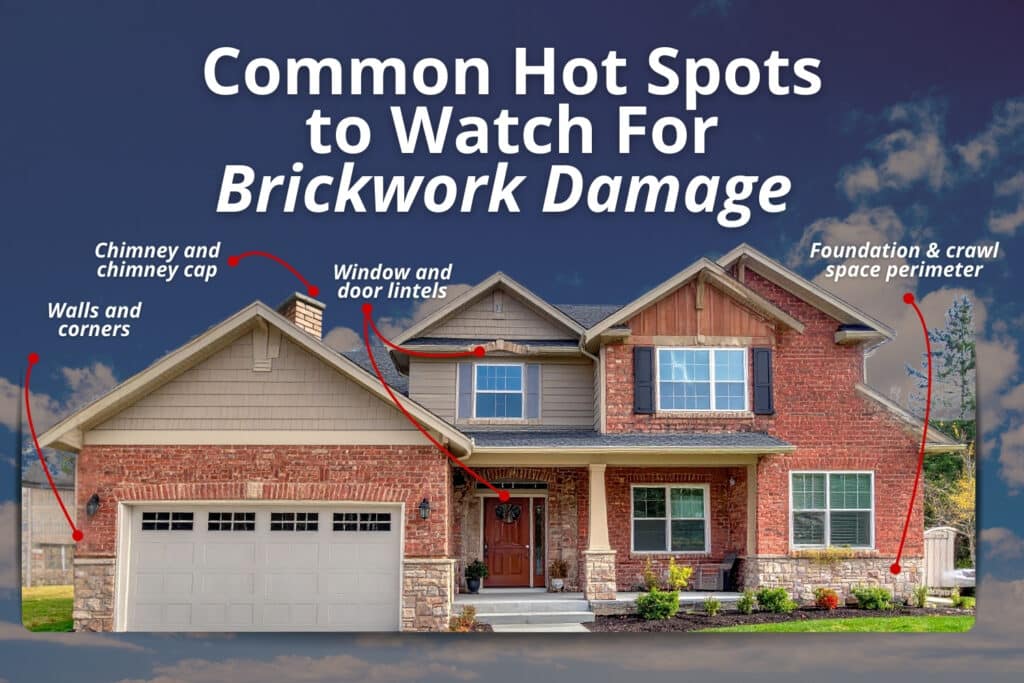
Where Does Brickwork Damage Show Up First?
Not all brickwork is equally vulnerable. Certain areas take the brunt of Ohio’s soil pressure and moisture conditions, and those are the spots that tend to fail first.
- Below-grade basement walls are the most common trouble zone. These walls sit in direct contact with soil and face the full force of hydrostatic pressure after rain or snowmelt. Because they are underground, damage can develop for months or years before a homeowner notices it from the inside.
- The crawl space perimeter is another high-risk area. Brick or block walls along the crawl space foundation sit at or just below grade, making them especially exposed to ground moisture and freeze-thaw expansion. This area is frequently overlooked because it is out of sight.
- The base of exterior walls at grade level is where the foundation meets the above-grade structure. This transition zone sees both soil pressure from below and weather exposure from above, making it a common spot for stair-step cracking and mortar deterioration.
- Window wells and below-grade openings concentrate water against the wall rather than draining it away, accelerating moisture intrusion in those localized spots.
- Areas near downspout discharge points are consistently exposed to high water volume. If gutters are not directing water far enough from the home, the foundation walls nearest those discharge points tend to show deterioration faster than the rest.
What Damaged Brickwork Is Telling You
Brickwork does not fail in isolation. Visible masonry damage usually communicates a problem with the broader system: the foundation, drainage, and moisture management of the home.
Here is how to read the most common signs:
- Cracked or crumbling mortar joints are often the first sign. Mortar is softer than brick and deteriorates first. When joints fail, water has a direct path into the wall. That moisture works its way into the foundation and eventually into the basement or crawl space below.
- Horizontal cracks typically indicate significant soil pressure pushing against the wall, which can lead to bowing or inward leaning over time. This is a structural concern that goes beyond masonry repair alone.
- Stair-step cracking follows the mortar lines in a diagonal pattern and usually points to foundation settlement. Different parts of the foundation are moving at different rates, and the brickwork reflects that stress.
- Bowing or bulging walls mean the wall has already started to move under pressure. The longer it goes without attention, the more significant and costly the repair becomes.
- Efflorescence, the white chalky residue sometimes seen on brick surfaces, confirms that water is actively moving through the masonry. It is not structurally dangerous on its own, but it is a reliable sign that moisture infiltration is already happening.
| Damage Type | What It Indicates | Urgency Level |
| Crumbling mortar joints | Water infiltration pathway | Moderate |
| Horizontal cracks | Soil pressure, potential bowing | High |
| Stair-step cracking | Foundation settlement | High |
| Bowing or bulging | Active wall movement | Urgent |
| Efflorescence | Active moisture infiltration | Moderate |
How Can Damaged Brickwork Affect Your Basement or Crawl Space?
This is where homeowners most often go wrong. Brickwork damage feels like an exterior issue. But the interior of your home below grade is directly affected by what happens in those walls.
- Water intrusion is the most immediate consequence. Failed mortar joints and cracks are one of the primary pathways water uses to enter a basement. Once that barrier is compromised, even moderate rain can result in seepage, pooling, and ongoing moisture problems.
- Mold and air quality follow moisture. Humidity entering through damaged brickwork raises moisture levels in the basement and crawl space, creating ideal conditions for mold. Because air moves naturally upward through a home, mold and degraded air quality affect the living spaces above.
- Crawl space deterioration is a serious downstream effect. Moisture migrating through failing brickwork along the crawl space perimeter causes wood rot in floor joists and sill plates, weakening the structural framing that supports the floors above.
- Foundation wall compromise is the worst-case outcome. A basement wall under sustained pressure can begin to bow inward. Once that movement starts, it does not stop on its own.
Fixing Brickwork Is Just the First Step
Masonry repair addresses the immediate damage. But it works best as part of a broader approach.
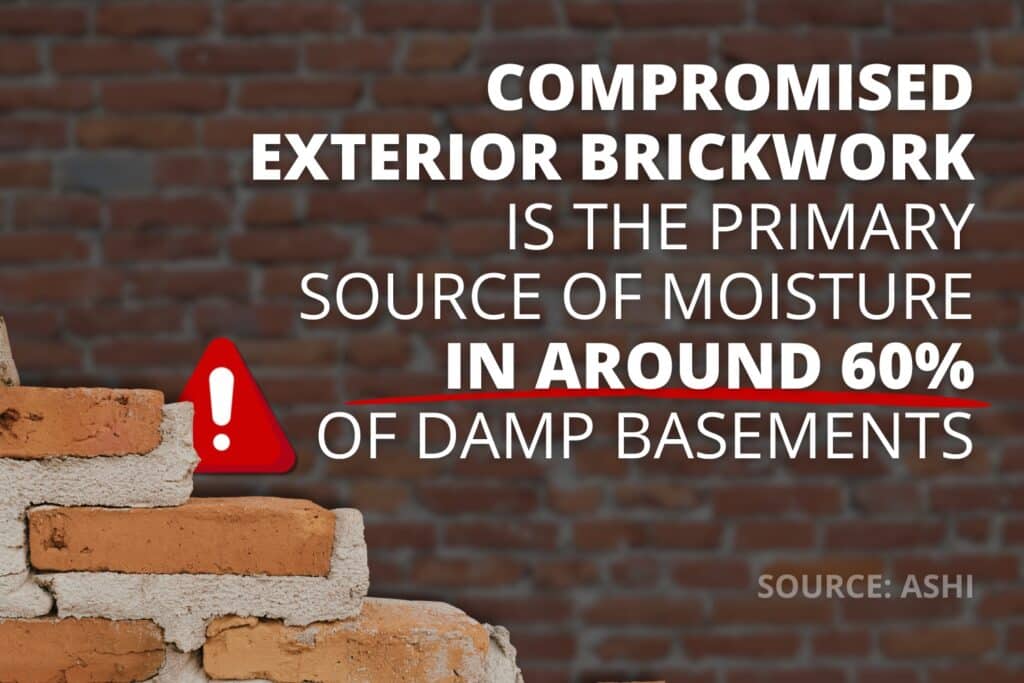
Fixing brickwork without addressing the moisture and drainage conditions that caused it is like patching a leak without finding the source.
A comprehensive approach typically involves:
Basement Waterproofing
Interior waterproofing systems manage water that makes it through the wall, routing it to a drainage system before it causes damage.
In Columbus, where hydrostatic pressure is a consistent seasonal reality, waterproofing and masonry repair go hand in hand.
Crawl Space Encapsulation
Encapsulation seals the crawl space from ground moisture and outside air, preventing the humidity and condensation that accelerate wood decay and mold growth.
It works alongside masonry repair by managing moisture from both the wall and the ground.
Sump Pump Systems
A properly installed sump pump and pit provide drainage that keeps the basement dry even during heavy rain events in Columbus.
A repaired wall without drainage, or a sump pump behind a failing wall, both leave the job half done.
Structural Carpentry
When moisture from failing brickwork has already reached floor joists, sill plates, or support beams, structural carpentry repairs address that wood damage directly before it affects the floors and walls above.
Related Questions
What are the most common signs of foundation problems in Columbus homes?
Horizontal cracks, bowing walls, stair-step cracking, and uneven floors are all common indicators. Columbus clay soil and seasonal moisture shifts make foundation stress a frequent issue, and early detection makes a significant difference in repair scope and cost.
How does basement waterproofing work in a home with ongoing water intrusion?
Interior waterproofing systems collect water that enters through the walls or floor and route it to a sump pit for removal. It is typically the most effective long-term solution for Columbus basements that deal with consistent hydrostatic pressure and seasonal seepage.
What is crawl space encapsulation, and when is it necessary?
Encapsulation involves sealing the crawl space with a vapor barrier and often a dehumidifier system to control moisture. It is recommended when there is evidence of standing water, wood rot, mold, or high humidity, all of which are common consequences of ongoing foundation and masonry issues.
How do sagging floors connect to foundation and crawl space problems?
Sagging or bouncy floors are often a sign that floor joists or sill plates have been weakened by prolonged moisture exposure. This type of structural wood damage frequently originates in the crawl space and is directly connected to how well the foundation perimeter manages water.
What does a basement inspection typically involve?
A professional basement and foundation inspection evaluates wall condition, signs of water intrusion, drainage performance, and structural integrity. It is the starting point for understanding what repairs are needed and in what order they should be addressed.
Conclusion
Damaged brickwork is not a problem that stays in one place. Left unaddressed, it becomes a pathway for water, a contributor to foundation movement, and a source of moisture that spreads through your basement or crawl space and into the structure of your home.
The good news is that when it is caught and treated correctly, the right combination of masonry repair, waterproofing, and structural work can stop the damage and protect your home for the long term.
Buckeye Basement Solutions serves Columbus and the surrounding area with comprehensive foundation and masonry services, from wall repair and rebuild to full waterproofing and crawl space encapsulation.