If your floors feel bouncy, uneven, or are visibly dipping in certain areas, there’s a good chance your floor joists are part of the problem. Sagging floor joist repair is one of the most common structural fixes for homes in Central Ohio, and catching it early can save you thousands in more extensive foundation or framing work down the road.
The good news is that sagging joists don’t mean your home is falling apart. But they do mean something is putting stress on your home’s structural support system, and the longer it goes unaddressed, the worse it tends to get.
Here’s how to spot the warning signs, understand what’s causing them, and know what your repair options look like.
What Do Floor Joists Actually Do?
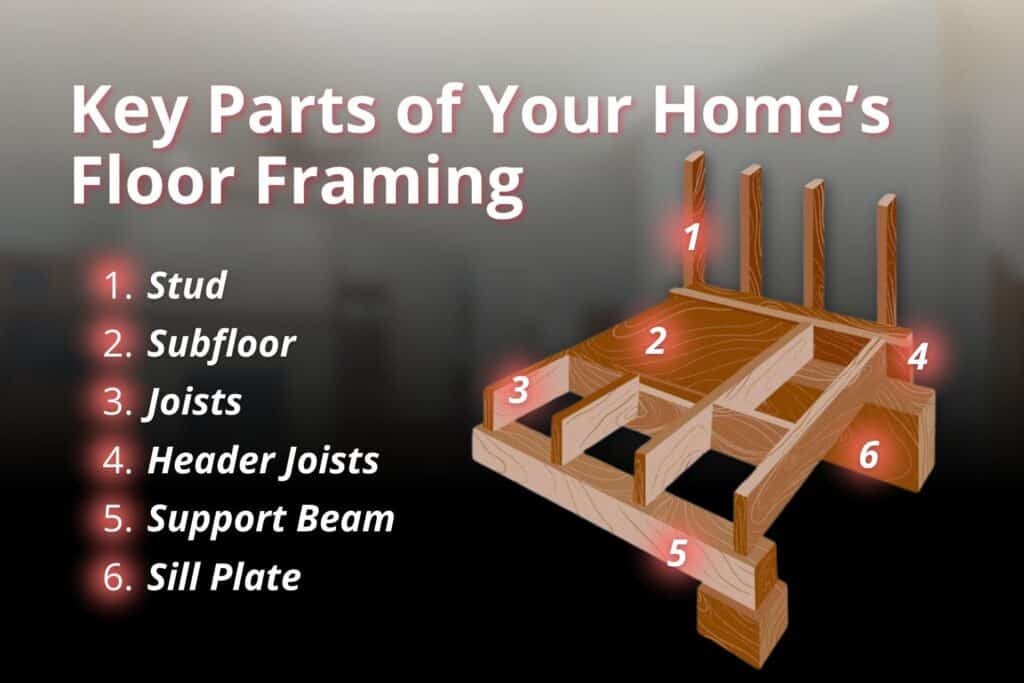
Floor joists are the horizontal framing members that support your subfloor and everything on top of it.
They span the distance between your foundation walls or support beams and carry the weight of your flooring, furniture, appliances, and foot traffic down into the foundation.
When joists are in good shape, your floors feel solid and level. When they weaken, warp, or lose support, you start to feel it underfoot before you ever see it.
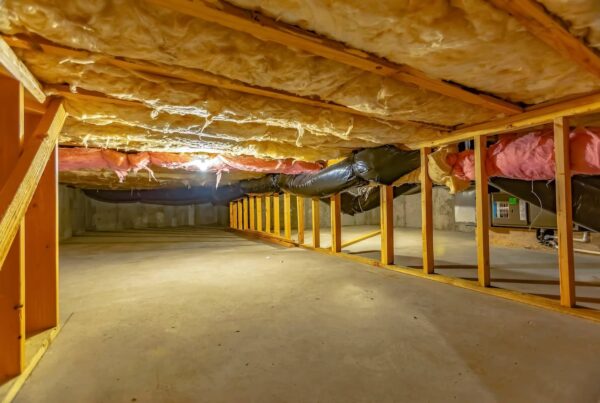
In most Columbus-area homes, floor joists are made of dimensional lumber, typically 2x8s or 2x10s, and they’re supported by the foundation walls on either end and often by a center beam or support columns in the basement or crawl space.
Warning Signs You Might Need Sagging Floor Joist Repair
Sagging joists don’t always announce themselves with a dramatic dip in the floor. The early signs are subtle, and knowing what to look for can help you act before the damage spreads.
What you might notice upstairs:
- Floors that feel soft, bouncy, or uneven when you walk across them
- Visible sloping or dipping, especially toward the center of a room
- Doors that stick or won’t latch properly
- Cracks forming in drywall near door frames or along ceiling lines
- Gaps between the baseboard and floor
What you might notice in the basement or crawl space:
- Joists that are visibly bowed, cracked, or split
- Signs of moisture damage, dark staining, or soft wood
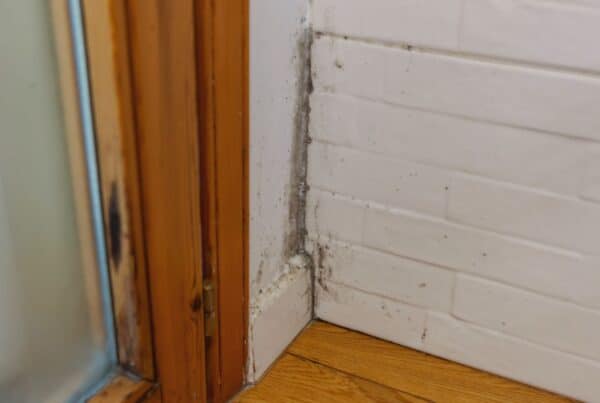
- Mold or mildew along the wood framing
- Support columns or beams that have shifted or appear tilted
- A musty smell that gets stronger in warmer months
It’s worth noting that many homeowners in the Columbus area first notice these signs during seasonal shifts.
Ohio’s freeze-thaw cycles put extra stress on foundations and framing, and humidity swings between summer and winter can accelerate moisture damage in basements and crawl spaces.
What Causes Floor Joists to Sag?
Understanding the cause matters because it determines the right repair approach. A joist that’s sagging due to moisture damage needs a different solution than one that’s undersized for the load it’s carrying.
| Cause | What’s Happening |
| Moisture and water damage | Wood absorbs moisture, softens, and loses structural strength over time |
| Rot and wood decay | Prolonged moisture exposure leads to fungal decay that breaks down wood fibers |
| Pest damage | Termites and carpenter ants hollow out joists from the inside |
| Inadequate support | Missing or shifted columns, or spans that are too long for the joist size |
| Age and load stress | Decades of weight and use gradually weaken the framing |
| Poor original construction | Undersized joists, improper spacing, or notching that weakens the member |
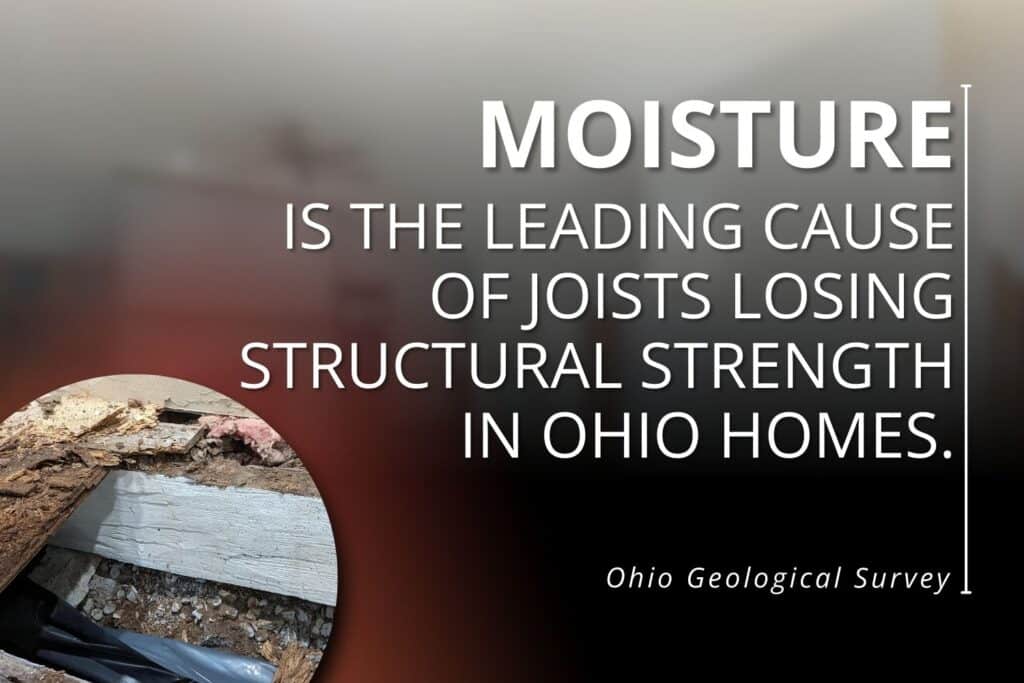
In Central Ohio specifically, moisture is the leading driver. Homes in areas like Westerville, Dublin, Reynoldsburg, and Grove City deal with high water tables and clay-heavy soil that holds moisture against the foundation.
That moisture migrates into basements and crawl spaces, and over time, it takes a toll on the wood framing. This is also why sagging floor joist repair often goes hand in hand with basement waterproofing or crawl space encapsulation.
Fixing the joist without addressing the moisture source means the problem is likely to come back.
How Sagging Floor Joist Repair Works
There’s no single fix for every situation. The right approach depends on how many joists are affected, what caused the damage, and the overall condition of your structural system. Here are the most common repair methods.
Sistering
Sistering involves attaching a new joist directly alongside the damaged one to restore strength and rigidity. The new joist is cut to match the span and secured with structural fasteners or bolts.
This is one of the most common sagging floor joist repair methods and works well when the existing joist is weakened but still partially intact.
Support Columns and Beams
If joists are sagging because of inadequate support underneath, adding or replacing support columns and beams can correct the issue.
Adjustable steel columns are commonly used in basements to lift and stabilize the floor system over time. This method addresses the support problem at its source rather than reinforcing individual joists.
Full Joist Replacement
When a joist is too far gone, whether from severe rot, pest damage, or structural failure, replacement is the best path forward.
This involves removing the damaged joist and installing a new one in its place. It’s more involved than sistering, but necessary when the original member can no longer contribute to the structural system.
Crawl Space Structural Repair
For homes built over crawl spaces rather than full basements, the repair process often includes additional considerations.
Crawl spaces in the Columbus area are especially prone to moisture problems, and structural carpentry work in these spaces frequently pairs with encapsulation to create a dry, stable environment that protects the new or repaired framing long-term.
Why Moisture Control Matters for Long-Term Results
Sagging floor joist repair is a structural fix, but moisture is what causes most of the damage in the first place. If the underlying moisture issue isn’t addressed at the same time, repaired or replaced joists are exposed to the same conditions that damaged the originals.
That’s why many sagging joist projects in Central Ohio include some form of moisture management as part of the scope.
Basement waterproofing keeps water from entering the basement through foundation walls or the floor slab. Interior drainage systems, sump pumps, and vapor barriers work together to redirect water and reduce humidity levels.
Crawl space encapsulation seals the crawl space from ground moisture and outside air. A heavy-duty vapor barrier covers the floor and walls, and in many cases, a dehumidifier is added to maintain controlled humidity levels year-round.
Both of these solutions protect the structural repairs you’ve invested in and help prevent future damage to your home’s framing.
Other Questions Homeowners Ask
How can I tell if my foundation needs repair?
Cracks in basement walls, sticking doors and windows, and gaps around window frames are common indicators. Foundation issues and sagging joists often show up together since both relate to your home’s structural system.
What is crawl space encapsulation?
Encapsulation seals your crawl space from ground moisture and outside humidity using a heavy-duty vapor barrier system. It’s one of the most effective ways to protect wood framing and improve air quality in the home above.
Does a wet basement cause long-term damage?
Yes. Standing water and persistent dampness in a basement can lead to mold growth, wood rot, and weakened structural framing over time. Waterproofing addresses the root cause before the damage spreads.
Should I get a structural inspection before buying a home?
It’s a smart move, especially for older homes. A foundation and structural inspection can identify joist damage, foundation cracks, and moisture issues that may not be visible during a standard walkthrough.
When to Call a Professional
Some floor issues are cosmetic, but sagging, bouncy, or sloping floors almost always point to a structural concern that needs professional evaluation. This isn’t the type of repair most homeowners should attempt on their own.
It’s time to reach out if:
- You can feel the floor flex or dip when you walk across it
- The sagging seems to be getting worse over time
- You see visible joist damage in the basement or crawl space
- There are signs of moisture, mold, or wood decay near the framing
- You’re preparing to buy or sell a home and want a clear structural picture
A professional assessment will identify which joists are affected, what’s causing the damage, and what combination of repair and moisture control will give you a lasting fix.
Conclusion
Sagging floors are one of those problems that are easy to put off, but they don’t resolve on their own. The earlier you address sagging floor joist repair, the more options you have and the less it typically costs.
If you’re in Columbus or anywhere in Central Ohio and you’ve noticed signs of sagging or uneven floors, the team at Buckeye Basement Solutions can help.
We specialize in structural carpentry, basement waterproofing, crawl space encapsulation, and foundation repair, so we can address the full scope of the issue, not just one piece of it.
Ready to get a professional assessment? Contact Buckeye today.